Cold Shoulders: How Seoul's Political Class Abandons Its Homeless Population Every Winter
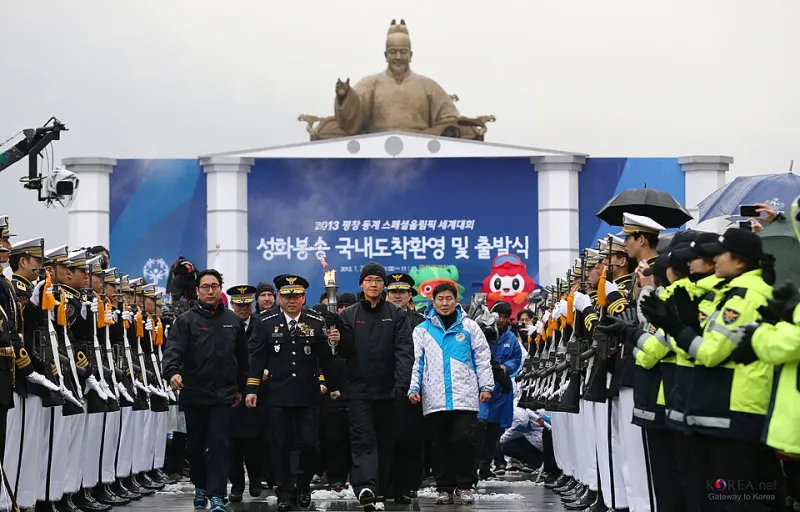
Photo: Republic of Korea from Seoul, Republic of Korea, CC BY-SA 2.0, via Wikimedia Commons
The announcement arrives with the dependability of the season itself. As the first hard freeze settles over Seoul each December, city officials convene a press conference. Emergency warming centers will be expanded. Outreach teams will patrol the streets overnight. No one, the mayor's office pledges, will be left to face the cold alone. The cameras record the assurances. The press release goes out. And then, in the gaps between the rhetoric and the reality, people die.
South Korea's winter homelessness crisis is not a secret. It is not a newly discovered problem. It is, by now, a ritual — as predictable in its contours as kimjang season or the first snowfall on Bukhansan. What makes it a political story rather than merely a humanitarian one is the consistency with which the political system has chosen to manage its appearance rather than its substance.
The Scope of the Problem
Precise data on homelessness in South Korea is difficult to obtain, in part because official counting methodologies have long been criticized for undercounting. The Ministry of Health and Welfare conducts periodic surveys, but advocates and researchers consistently argue that point-in-time counts conducted during daylight hours miss a substantial proportion of people sleeping rough, particularly those who shelter in underground spaces, 24-hour PC cafes, or temporary arrangements that fall outside standard definitions.
What the available data does confirm is that Seoul accounts for a disproportionate share of the country's unhoused population, with estimates from civic organizations suggesting several thousand people sleep without stable shelter in the capital on any given winter night. The demographic profile has shifted in recent years: while middle-aged men remain the largest group, the number of elderly individuals, women, and young adults experiencing homelessness has grown, reflecting broader pressures from housing costs, precarious employment, and family breakdown.
For context, the situation rhymes with patterns familiar to American readers. Cities like Los Angeles, Chicago, and New York have similarly struggled to translate winter emergency declarations into durable housing solutions, cycling between tent encampment clearances and inadequately funded shelter expansions while the underlying housing shortage persists. Seoul's version of this failure has its own institutional character, but the political logic is recognizable.
Emergency Measures That Are Never Quite Enough
Seoul's official winter response framework is not nothing. The city operates a network of homeless shelters and temporary warming centers, and the national government provides supplementary funding through cold-weather emergency protocols. Outreach workers, many of them employed by nonprofits operating under government contract, conduct nightly rounds through the areas where homeless individuals are known to congregate — subway underpasses, riverbank pathways, the areas around Seoul Station.
But the system is riddled with structural gaps that advocates have been documenting for years. Shelter capacity consistently falls short of demand during peak winter months. Facilities impose rules — sobriety requirements, curfews, restrictions on personal belongings — that discourage some of the most vulnerable individuals from using them. The geographic distribution of warming centers is uneven, leaving certain districts poorly served. And the funding allocated to winter homeless services, while not trivial, has not kept pace with either rising operating costs or the documented growth in need.
"Every year, we prepare a detailed report showing the gaps," said a program director at one of Seoul's major homeless service organizations, who spoke on background given sensitivities around government funding relationships. "Every year, we present it to the relevant city offices. And every year, the response is to announce the same programs with modest adjustments, rather than to address the foundational issues of capacity and accessibility."
Budget Arithmetic and Political Will
A close reading of Seoul's municipal budget documents reveals the tension between declared priorities and actual resource allocation. Homelessness-related services, while present in the budget, represent a fraction of the city's social welfare expenditure, and the winter emergency supplement — typically announced with considerable fanfare — often amounts to a relatively modest increment over baseline funding.
Critics point to a pattern of political incentive that discourages genuine investment. Homelessness, in South Korea as in many democracies, does not constitute a powerful electoral constituency. Unhoused individuals face significant barriers to voter registration and participation. The populations most affected by inadequate winter shelter — elderly men with substance use histories, individuals with untreated mental illness, young people estranged from family networks — are not groups whose political mobilization city officials need to fear.
What politicians do fear is the reputational damage of a high-profile death. And so the system is calibrated, critics argue, not to solve the problem but to manage its visibility. Increased patrols in the weeks immediately following a cold-weather fatality. A temporary expansion of warming center hours after a particularly harsh cold snap generates media coverage. A statement of concern followed by a return to baseline once the news cycle moves on.
The opposition Democratic Party has, at various points, attempted to leverage winter homelessness as an issue against ruling-party municipal administrations, calling for permanent shelter expansion and a restructured social safety net. The People Power Party has emphasized individual responsibility frameworks and the importance of mental health and substance use treatment as pathways out of homelessness. Neither framing has produced the sustained legislative investment that service providers say is necessary.
What Activists Are Demanding
On the ground, the organizations working most closely with Seoul's homeless population have moved beyond seasonal advocacy to push for systemic change. Their demands are specific: a significant and permanent increase in low-barrier shelter beds, meaning facilities that do not require sobriety or adherence to strict behavioral rules as a condition of entry; an expansion of Housing First pilot programs, a model that has demonstrated effectiveness in the United States, Finland, and elsewhere by prioritizing stable housing before addressing other life challenges; and a reform of the official homeless count methodology to produce data that actually reflects the scale of the problem.
"We do not need another winter emergency press conference," said one activist affiliated with a Seoul-based homeless rights coalition. "We need a budget line that does not disappear in April."
The Housing First model, which has gained traction in American cities including Houston and has been implemented at national scale in Finland with measurable success, has been piloted in limited form in South Korea but has not been adopted as a governing framework. Advocates argue that the political will for such a shift does not exist as long as homelessness remains a winter story rather than a year-round policy priority.
A Seasonal Conscience
There is something revealing about the way South Korean political culture, like its American counterpart, frames homelessness as a cold-weather emergency rather than a structural condition requiring structural remedies. The winter framing is not without logic — freezing temperatures do create acute life-threatening risk — but it also functions as a containment strategy, allowing the issue to be addressed seasonally and then set aside.
As Seoul prepares for another winter, the warming centers will open, the outreach vans will roll, and the press releases will be drafted. Whether any of it adds up to a meaningful departure from the pattern of the past decade is a question that will be answered not in December's announcements, but in the budget decisions made in the quieter months of spring — when the cold has retreated, the cameras have moved on, and the political incentive to pay attention has, once again, thawed away.