Matchmaking Under the Snow: How Korea's Winter Romance Season Is Being Drafted Into a Demographic Emergency
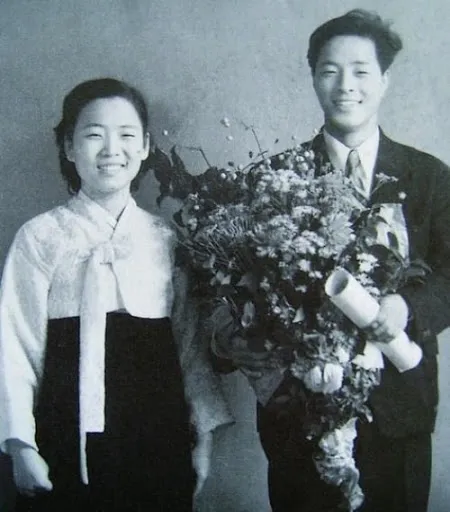
Photo: unknown author, Public domain, via Wikimedia Commons
In most countries, the winter holidays are a time for family gatherings, festive meals, and the occasional awkward office party. In South Korea, they are something closer to a national reckoning. From the first frost of November through the lantern-lit stillness of the Lunar New Year, the country's social calendar transforms into an elaborate, high-pressure theater of romantic possibility—one that carries stakes far beyond any individual heart.
South Korea recorded a total fertility rate of 0.72 in 2023, the lowest of any country in the Organisation for Economic Co-operation and Development. The government in Seoul has spent an estimated $200 billion over two decades attempting to reverse this trend, with programs ranging from housing subsidies for young married couples to state-sponsored matchmaking events. Yet the numbers continue to fall. And increasingly, policymakers and demographers are turning their attention to a peculiar cultural phenomenon: the outsized emotional weight that Korean society places on winter romance.
A Season Engineered for Coupling
Christmas in South Korea is not primarily a family holiday. It is, by longstanding cultural convention, a couples' occasion—a day when being unpartnered carries a social visibility that Americans might associate with arriving alone to a wedding. The tradition took root in the 1990s, accelerated by television dramas that framed December 25 as the apex of romantic fulfillment, and has since calcified into something resembling social doctrine.
"There is a phrase Koreans use: solo hell," said Dr. Yoon Ji-hyun, a sociologist at Yonsei University who studies generational attitudes toward marriage. "It captures the sense that being single during winter is not merely inconvenient—it is a condition to be escaped. That framing is not accidental. It has been cultivated over decades by media, by commercial interests, and now, more explicitly, by demographic policy."
The commercial infrastructure supporting winter romance is substantial. Dating applications report their highest user registration figures between November and January. Sogaeting—the Korean practice of blind dates arranged through mutual acquaintances—intensifies during this period, as does participation in meeting culture, the group blind-date format that has been a fixture of Korean social life since the 1980s. More recently, a new category of event has emerged: the government-affiliated matchmaking expo, organized by municipal offices and sometimes co-sponsored by the Ministry of Health and Welfare.
Policy in a Red Envelope
The Seoul Metropolitan Government has hosted winter matchmaking fairs since the mid-2010s, and several regional administrations have followed suit. These events, typically held in heated exhibition halls and framed with the aesthetic vocabulary of a wedding trade show, offer structured introductions between single adults in their late twenties and thirties. Attendance is free; in some cases, participants receive modest financial incentives simply for showing up.
Critics argue that the state's involvement in romantic life represents an overreach that infantilizes young adults and misdiagnoses the problem. "The government treats low birth rates as though they were caused by a shortage of introductions," said Park Sung-min, a 31-year-old software engineer in Seoul who attended one such event last January at the urging of his parents. "But that is not why people are not having children. It is because housing costs a fortune, childcare is inadequate, and employers still expect women to exit the workforce after becoming mothers. No amount of government matchmaking fixes any of that."
Park's skepticism is widely shared among younger Koreans, particularly women. Feminist scholars and activist groups have pointed out that the demographic crisis is, in significant part, a product of structural gender inequality—that South Korean women are making rational decisions to delay or forgo marriage and children in response to a labor market and domestic culture that penalizes them for both. Framing the solution as better winter date nights, these critics argue, is not merely insufficient. It is insulting.
The App Economy and Its Anxieties
Dating application executives occupy an ambivalent position in this debate. Companies such as Kakao and the South Korean arm of Match Group have benefited enormously from the seasonal spike in romantic anxiety, yet they are also acutely aware that their platforms are perceived, by a growing segment of users, as instruments of social coercion rather than genuine connection.
"We see the numbers every December," said one product executive at a Seoul-based dating platform, who asked not to be identified by name. "New sign-ups, session lengths, premium subscription conversions—everything climbs. But we also see the qualitative data. User reviews in winter have a different emotional texture. There is more desperation in the language. More people writing that they feel they have no choice but to be here."
That tension—between romantic aspiration and demographic obligation—is visible in how Korean dating apps have begun marketing themselves. Advertisements that once emphasized personal compatibility and individual happiness now frequently incorporate language about family formation and societal contribution. The romantic and the political have been sutured together in ways that American users of platforms like Hinge or Bumble would likely find jarring.
Resonances Across the Pacific
For American observers, South Korea's winter romance apparatus offers a refracted glimpse of anxieties that are, in different forms, familiar at home. The United States is not experiencing a fertility crisis of South Korean magnitude, but American public discourse has grown increasingly preoccupied with declining marriage rates, the so-called "dating app fatigue" phenomenon, and generational divergences in attitudes toward partnership and family.
The difference, for now, is that the American state has not formally entered the matchmaking business. South Korea's experiment in government-sponsored romantic intervention represents something genuinely novel: a democratic government attempting to engineer desire through seasonal cultural programming. Whether it works is, by every available metric, deeply uncertain. Whether it should be tried at all is a question that cuts to the heart of what governments owe their citizens—and what they have no business asking of them.
The View From the Cold
On a gray Tuesday evening in late November, a line of young professionals stretched around the block outside a community center in Mapo-gu, a district of western Seoul. They were waiting to register for a municipal matchmaking event organized by the district office. Some looked eager. Several stared at their phones with the studied indifference of people performing nonchalance. A few, when asked, admitted they had come because a parent had registered them without asking first.
"I do not think this will work," said one woman in her early thirties, a marketing professional who gave her name only as Jiyeon. "But I also do not know what else to do. Everyone around me is either married or pretending not to care. Winter makes that very loud."
The cold outside was sharp and settling in for a long stay. Inside, the fluorescent lights hummed over name tags and nervous smiles, and the season's old, complicated work went quietly on.