Seoul's December Scramble: What South Korea's Winter Budget Crunch Means for American Capital
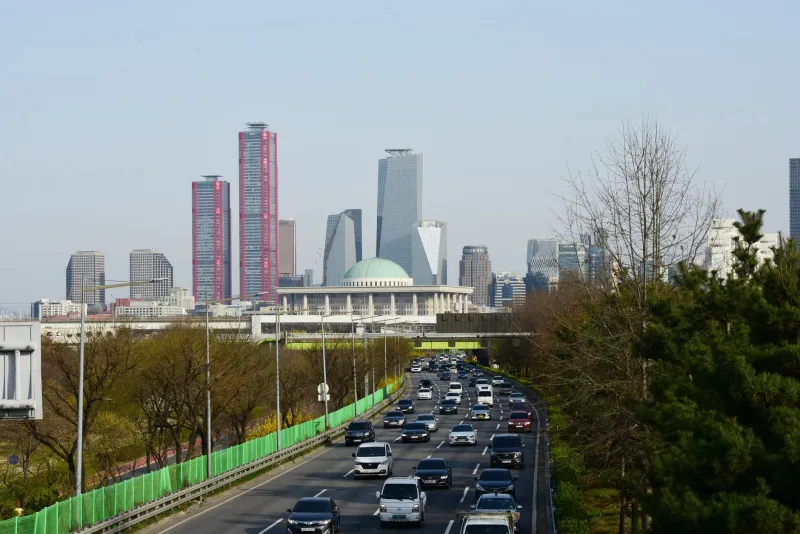
Every year, as temperatures across the Korean Peninsula drop toward freezing, a different kind of pressure builds inside the glass corridors of the National Assembly in Yeouido. South Korea's constitution mandates that the government submit its annual budget bill to parliament by September 3, with a final passage deadline of December 2. In practice, that deadline is routinely breached. What follows is a compressed, high-stakes legislative negotiation conducted in the dead of winter — one with consequences that extend far beyond Seoul's political class and into the portfolios of American investors.
For U.S. businesses and fund managers tracking Korean equities, technology partnerships, or bilateral trade exposure, the annual winter budget battle is not an abstraction. It is a live variable.
The Constitutional Clock and Its Chronic Failures
South Korea's budget process is constitutionally structured but politically ungovernable. The Ministry of Economy and Finance drafts the spending blueprint, the executive submits it, and the National Assembly is expected to ratify it before the fiscal year turns. The reality is considerably messier.
In recent years, full budget passage has slipped well past December 2 — sometimes into late December, occasionally brushing the new year entirely. When lawmakers cannot agree, the government operates on a provisional budget drawn from the previous year's allocations, a mechanism that freezes new spending commitments and delays the disbursement of freshly authorized funds.
For sectors dependent on government-linked capital — and in South Korea, that list is long — a provisional budget is not a neutral holding pattern. It is a pause button pressed at the worst possible moment, just as companies are finalizing their own fiscal planning for the year ahead.
Semiconductors: The Subsidy Cliff at Year's End
No sector illustrates the stakes more concretely than semiconductors. South Korea's chip industry, anchored by Samsung Electronics and SK Hynix, operates within a dense web of government support mechanisms: R&D tax credits, facility investment incentives, and targeted industrial subsidies that require annual legislative reauthorization or fresh appropriation.
American investors with positions in Korean chip stocks — or in U.S. firms deeply integrated with Korean suppliers — have learned to monitor the December legislative calendar with unusual care. When budget negotiations stall, subsidy disbursements can be delayed by weeks. For companies managing capital expenditure cycles that run into the tens of billions of dollars, even a short delay in government co-investment signals can shift quarterly earnings guidance.
The 2022-2023 budget cycle offered a pointed case study. Amid intensifying political friction between the Yoon Suk-yeol administration and an opposition-controlled National Assembly, semiconductor-related appropriations became a bargaining chip in broader fiscal negotiations. The resulting uncertainty contributed to a period of notable volatility in Korean tech equities during January 2023 — a window when several U.S.-based institutional investors with Korean market exposure reported elevated hedging activity.
Startup Funding and the Venture Capital Freeze
Beyond the large conglomerates, South Korea's government-linked venture ecosystem is acutely sensitive to winter budget outcomes. The Korea Venture Investment Corporation and a network of public-private funds channel significant state capital into early- and growth-stage companies. These programs are funded through annual budget appropriations.
When the December deadline slips, the practical effect is a delayed opening of the funding spigot. Korean startups anticipating government-backed investment commitments in the first quarter of the new year may find themselves in a liquidity gap — a problem with direct implications for U.S. venture firms and corporate investors who have co-invested alongside Korean public funds or who are tracking Korean tech startups as acquisition targets.
Silicon Valley observers who have watched the Korean startup ecosystem mature over the past decade increasingly note that the government's role as a co-investor makes Korean venture capital uniquely exposed to political seasonality. A budget impasse in December is not just a fiscal inconvenience; it can alter the timing of Series A and Series B rounds in ways that affect deal structures across borders.
Reading the Legislative Temperature
For American investors, the practical challenge is translating Seoul's winter political weather into actionable intelligence. Several indicators are worth monitoring.
First, the composition of the National Assembly matters enormously. A parliament in which the president's party holds a majority tends to resolve budget negotiations more cleanly, even if not always on time. A divided government — the configuration South Korea has operated under for significant stretches of recent political history — introduces structural delay and elevates the probability of a provisional budget scenario.
Second, the specific line items under dispute reveal which sectors face the greatest uncertainty. Budget negotiations in South Korea are not conducted in the abstract; they are fought over specific programs. Tracking which appropriations are contested — whether chip subsidies, green energy investment mandates, or defense procurement lines — provides a sector-level map of where capital deployment will be slowest.
Third, the behavior of Korean institutional investors during December and January offers a real-time signal. When domestic pension funds and sovereign wealth vehicles begin repositioning ahead of anticipated budget delays, foreign investors paying close attention to order flow can detect the adjustment before it becomes headline news.
The Seasonal Dimension That Gets Overlooked
There is a dimension to South Korea's winter budget politics that financial analysts rarely discuss but that shapes the human dynamics of the negotiation: the physical and psychological weight of governing through a Korean winter.
Yeouido in December is bitterly cold. Legislative sessions run late into the night. The combination of constitutional deadlines, political brinkmanship, and genuine exhaustion among lawmakers and their staffs creates an environment in which decisions are made under conditions that would be recognizable to any American who has watched Congress negotiate a continuing resolution in the final days before a government shutdown.
The comparison is instructive. U.S. investors who have navigated Washington's own fiscal deadline dramas — the debt ceiling standoffs, the last-minute omnibus spending bills — are not without a conceptual framework for understanding Seoul's version of the same phenomenon. The institutional context differs, but the essential dynamic of compressed decision-making under political pressure is familiar.
Why This Winter, in Particular, Demands Attention
The political environment surrounding South Korea's current budget cycle is unusually charged. The constitutional turbulence of late 2024, which saw President Yoon Suk-yeol's brief declaration of martial law and the subsequent impeachment proceedings, has left the country's fiscal governance machinery operating under conditions of exceptional uncertainty.
With an acting government managing the executive branch and a National Assembly that remains deeply polarized, the mechanics of budget passage face structural obstacles that go beyond the ordinary friction of divided government. American investors who assumed that Korean fiscal politics were a background variable in their portfolio models may find that assumption increasingly difficult to sustain.
The winter budget battle, this year more than most, is a story worth following closely — not as political theater, but as a direct input into the investment calculus of anyone with meaningful exposure to one of the world's most consequential technology economies.