Seoul's Year-End Reckoning: What Korea's December Debt Squeeze Tells American Households About Their Own Financial Fragility

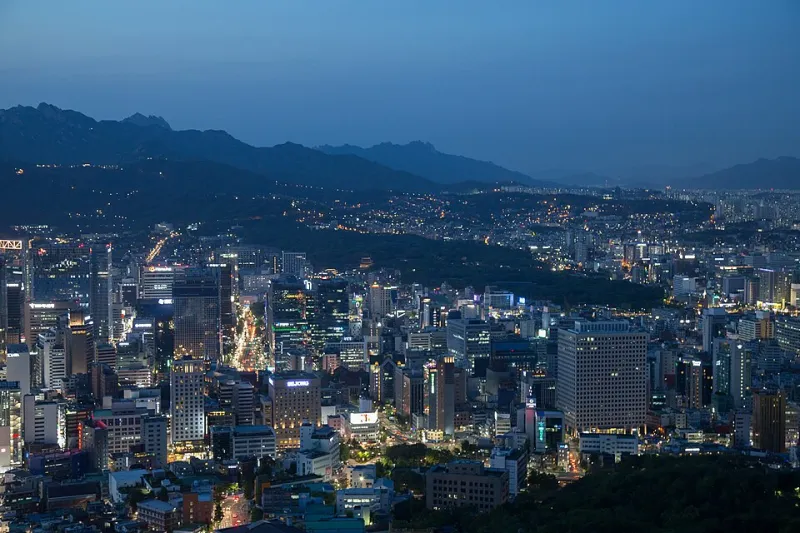
Photo: Steve46814, CC BY-SA 3.0, via Wikimedia Commons
Winter arrives in South Korea carrying more than frost. Each year, as temperatures drop across the peninsula, a quieter kind of pressure builds inside Korean households — one measured not in snowfall but in outstanding balances, overdue settlement accounts, and the particular anxiety of a culture that treats the calendar's end as a moral deadline for financial obligation. What unfolds across Seoul and the wider Korean economy every December is, to the trained observer, far more than a seasonal curiosity. It is a financial stress test that the United States would do well to study with genuine seriousness.
The Cultural Architecture of Korea's Winter Debt Season
To understand why December functions as a credit crucible in South Korea, one must first appreciate the cultural weight Korean society places on year-end financial settlement. The concept of clearing debts before the new year — rooted in Confucian values of responsibility and social reciprocity — is not merely a personal aspiration. It functions as a social norm, reinforced across family networks, business relationships, and community obligations. Failure to settle outstanding debts before the lunar or Gregorian new year carries reputational consequences that extend well beyond a simple credit score dip.
This cultural imperative collides, every winter, with a separate but equally powerful financial force: the bonus economy. Korean corporations traditionally distribute year-end bonuses in December, and these payments — when they arrive — are expected to be directed toward debt repayment, family gifts, and holiday expenditure simultaneously. The result is a brief but intense surge in cash movement that strains household balance sheets and, critically, reveals which families were operating with insufficient financial cushion throughout the year.
When bonuses arrive late, fall short of expectations, or fail to materialize entirely — as has occurred with increasing frequency among smaller Korean enterprises in recent winters — the gap between obligation and capacity becomes impossible to ignore.
How Lenders Respond: The Winter Credit Tightening Cycle
South Korean financial institutions are acutely aware of this seasonal dynamic. In anticipation of elevated default risk during the winter settlement period, banks and non-bank lenders routinely tighten lending standards beginning in late November. Credit card companies reduce available limits for customers showing elevated utilization rates. Mortgage lenders scrutinize refinancing applications with greater skepticism. Short-term consumer loan approvals slow measurably.
The consequence is a self-reinforcing cycle. Households seeking to consolidate or bridge debts before year-end find the very credit mechanisms they depend on becoming less accessible precisely when demand is highest. Interest rates on short-term consumer products — already elevated compared to longer-term instruments — tend to climb further during this window, as lenders price in seasonal risk. For households already operating near the margin, this combination of cultural pressure, reduced credit access, and higher borrowing costs creates a genuinely dangerous financial environment.
Korea's Financial Services Commission has tracked this winter credit contraction pattern for years, and recent policy discussions have centered on whether regulatory intervention — perhaps in the form of seasonal lending floor requirements or temporary rate caps — might blunt the cycle's sharpest edges. So far, the market has largely been left to manage itself.
The American Mirror: Recognizing Familiar Patterns
American readers may find the Korean December scenario uncomfortably familiar, even if the cultural scaffolding differs. The United States does not share Korea's Confucian debt-settlement traditions, but it has developed its own version of the year-end financial squeeze through a different set of mechanisms: holiday retail spending, credit card balance accumulation between Thanksgiving and Christmas, and the January reckoning that follows.
American consumer debt levels have reached historic highs in recent years. Credit card balances in the US surpassed $1.1 trillion in 2023, according to Federal Reserve data, with delinquency rates climbing steadily through 2024. The holiday season consistently produces the year's largest single-period spike in consumer borrowing, and the post-holiday contraction — when Americans confront January statements reflecting November and December spending — creates a miniature version of the same credit stress that Korea experiences more acutely in December.
What Korea's experience adds to this picture is a more visible demonstration of what happens when institutional lenders respond to seasonal vulnerability by pulling back simultaneously. When credit tightens at the exact moment households most need financial flexibility, the consequences ripple outward. Retail spending falls sharply. Small businesses that depend on consumer credit-driven purchases see revenues compress. Delinquency rates on existing obligations rise as households juggle competing payment demands with fewer available tools.
Implications for Federal Reserve Policy and Financial Oversight
The Korean winter debt cycle carries a specific lesson for American monetary policymakers that deserves deliberate attention. The Federal Reserve's interest rate decisions operate on long time horizons, but their effects concentrate unevenly across the calendar. In an environment of already-elevated rates — as the US has experienced through the post-pandemic tightening cycle — seasonal credit stress becomes amplified. Households that might have managed a December debt squeeze under lower rate conditions find themselves far more exposed when baseline borrowing costs are high and lenders are simultaneously applying their own seasonal risk premiums.
Korea's experience suggests that central banks and financial regulators should develop seasonal sensitivity into their monitoring frameworks. A household debt vulnerability that appears manageable in aggregate can become acutely dangerous during a concentrated window when cultural, institutional, and macroeconomic pressures align. The US Consumer Financial Protection Bureau, for its part, has increased scrutiny of credit card practices in recent years, but seasonal lending behavior — the specific pattern of how creditors adjust terms during high-stress periods — has received less systematic attention than it warrants.
Winter as a Financial Diagnostic Tool
There is a broader principle embedded in South Korea's December debt dynamics that transcends any single policy recommendation. Winter, in Korea's case, functions as a diagnostic season — a period when the structural weaknesses of household balance sheets, the responsiveness of institutional lenders, and the adequacy of regulatory frameworks are all subjected to simultaneous pressure. The cracks that appear during this season are not manufactured by winter itself; they are revealed by it.
The United States has its own diagnostic seasons, and the post-holiday financial hangover that stretches from January through March represents perhaps the most significant of them. The patterns emerging from Seoul each December — the credit contraction, the rate spikes, the household scramble — are not exotic phenomena confined to a distant market. They are a more concentrated, more culturally explicit version of dynamics that American consumers, lenders, and policymakers navigate every year with less clarity than they might wish.
Watching Korea's winter debt reckoning carefully is not an exercise in comparative curiosity. It is, for those willing to read the evidence seriously, an opportunity to see American financial vulnerabilities rendered in unusually sharp relief — before the cold fully arrives at home.