The Cold Season Safety Net That Leaves Millions Behind: Lessons from South Korea's Winter Welfare Architecture

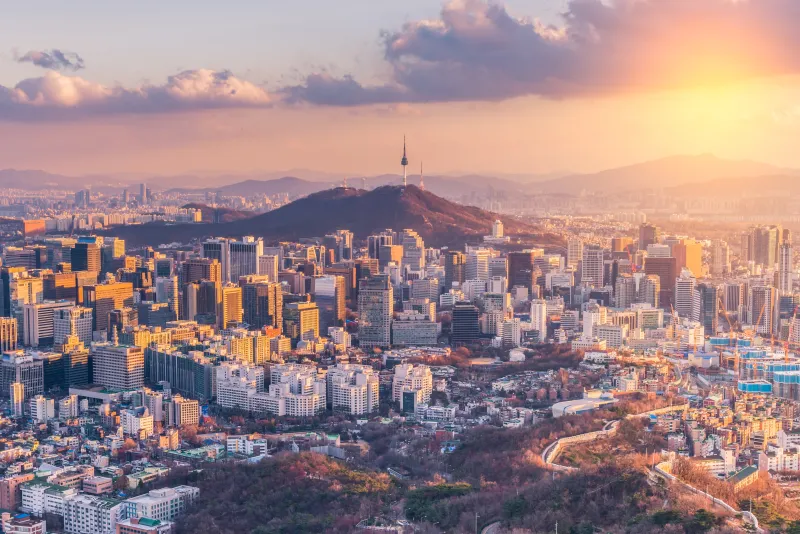
Photo: David W. Carmichael, CC BY 3.0, via Wikimedia Commons
Every November, a quiet machinery stirs inside South Korea's Ministry of Health and Welfare. Budgets are unlocked, application portals open, and local district offices begin fielding calls from citizens seeking emergency heating assistance, discounted utility bills, and cold-weather food supplements. For a brief window stretching from late autumn through February, the Korean state expands its reach — and then, almost as abruptly as the first frost, it retreats.
The question that deserves more scrutiny from American policymakers is not whether South Korea's winter welfare programs work. Many of them do, at least on paper. The deeper question is who they are designed to exclude — and whether the United States, increasingly drawn to targeted seasonal relief as a political compromise, is quietly preparing to repeat the same mistakes.
A System Built on Categories, Not Conditions
South Korea's primary cold-weather assistance framework operates through a tiered eligibility structure. At its core is the National Basic Livelihood Security System, which provides baseline support year-round. Layered on top of this during winter months are supplementary programs: heating fuel subsidies, emergency utility payment deferrals, and in-kind distributions of winter goods such as blankets, thermal clothing, and coal briquettes in rural areas.
On the surface, this appears comprehensive. In practice, the eligibility criteria create what welfare researchers at Seoul National University have described as a "documentation trap." Recipients must demonstrate not only income below a designated threshold but also formal household registration — a requirement that systematically excludes undocumented migrants, homeless individuals without fixed addresses, and the growing population of "near-poor" households whose incomes sit just above the cutoff line but whose actual financial precarity is severe.
The near-poor problem is particularly striking. South Korea has long struggled with a welfare cliff — the point at which earning marginally more income disqualifies a household from assistance entirely. During winter, this cliff becomes a precipice. A family earning five percent above the poverty threshold receives no heating subsidy, no utility deferral, and no emergency food support, even as temperatures in Seoul regularly plunge below minus ten degrees Celsius.
The Seasonal Illusion of Generosity
There is a political logic to seasonal welfare programs that makes them appealing to governments across the ideological spectrum. They appear generous without carrying the fiscal weight of permanent entitlements. They allow governing parties to signal responsiveness to human suffering while maintaining structural limits on long-term commitments. In Korea, winter relief announcements have become something of a political ritual — press conferences held against backdrops of stacked heating briquettes, ministers photographed distributing blankets in low-income neighborhoods.
But the optics of seasonal generosity can obscure a harsher administrative reality. A 2022 audit conducted by Korea's Board of Audit and Inspection found that a significant share of households eligible for winter heating subsidies either did not apply — due to lack of awareness or bureaucratic barriers — or were rejected on technical grounds unrelated to their actual need. The programs, in other words, were functioning as political theater as much as social protection.
This is not a uniquely Korean phenomenon. American readers will recognize the pattern. Federal programs like the Low Income Home Energy Assistance Program, better known as LIHEAP, operate on strikingly similar principles: seasonal windows, income thresholds, documentation requirements, and chronic underfunding relative to demonstrated need. In the winter of 2022 to 2023, LIHEAP served fewer than one in six eligible American households, according to figures from the National Energy Assistance Directors' Association.
Who Falls Through the Ice
The populations most systematically excluded from South Korea's winter relief architecture are worth examining closely, because they mirror the gaps in American seasonal welfare with uncomfortable precision.
First, there are the self-employed and gig workers. South Korea's welfare eligibility calculations rely heavily on formal income documentation. Individuals working outside traditional employment relationships — delivery drivers, freelance contractors, platform workers — frequently find their actual earnings either overestimated or miscalculated by welfare assessors, pushing them above eligibility thresholds they do not functionally exceed.
Second, there are elderly single-person households, a population that has grown dramatically as Korea's demographic crisis deepens. Many elderly Koreans, particularly those in rural provinces, are either unaware of available programs or physically unable to navigate the application process without assistance. Outreach infrastructure in these communities is consistently underfunded.
Third, and perhaps most politically charged, are foreign residents. South Korea's migrant worker population — numbering in the hundreds of thousands — is largely ineligible for domestic welfare programs regardless of tax contribution history. During winter months, this exclusion translates directly into measurable human harm: overcrowded and underheated dormitory housing, deferred medical care, and documented spikes in cold-related illness.
The Blueprint Problem
American policymakers increasingly look to East Asian social policy models for inspiration, and there are genuine lessons worth importing from Korea's approach to governance. But the winter welfare framework is one area where admiration should be tempered by scrutiny.
The core structural flaw is not unique to Korea: it is the assumption that poverty and vulnerability are conditions that can be adequately addressed through time-limited, category-specific interventions. This assumption produces programs that are administratively tidy but humanly inadequate. It rewards those who already know how to navigate bureaucratic systems while penalizing those whose circumstances make compliance most difficult.
For the United States, the relevant policy question is not whether to expand seasonal relief — most evidence suggests that targeted cold-weather assistance does reduce emergency room visits, utility shutoff rates, and cold-related mortality when it reaches people effectively. The question is whether seasonal framing should be treated as a feature or a limitation.
Korea's experience suggests it is almost always the latter. The populations left behind by winter subsidies do not become less poor or less vulnerable when March arrives. They simply become less visible.
Governing Through the Thaw
There is a broader governance lesson embedded in South Korea's seasonal welfare architecture, one that transcends the specifics of heating subsidies and blanket distributions. Governments that design social protection around the calendar are, in effect, designing it around political convenience rather than human reality. The winter crisis becomes a performance of concern. The spring thaw becomes a permission slip to look away.
For American audiences watching Korean politics from a distance, this pattern should prompt a degree of self-reflection. The United States has its own calendar-driven welfare rituals: the annual LIHEAP funding battles, the Thanksgiving and Christmas charity surges, the summer meal program debates that vanish from the legislative agenda by autumn. The seasonal framing makes the problem feel manageable. It also makes it easier to ignore eleven months of the year.
South Korea is not a cautionary tale so much as a mirror — one that reflects, with particular clarity, what happens when the machinery of government welfare is built for optics rather than outcomes. As American lawmakers debate the architecture of social spending in the years ahead, Korea's winter subsidy framework offers a detailed and instructive case study in the gap between a program's design and its actual reach.
The cold does not observe eligibility windows. Neither does poverty. Any safety net that forgets this will always leave the most vulnerable falling through.