Chips in the Cold: How South Korea's Winter Energy Strain Is Quietly Threatening America's Tech Supply Chain
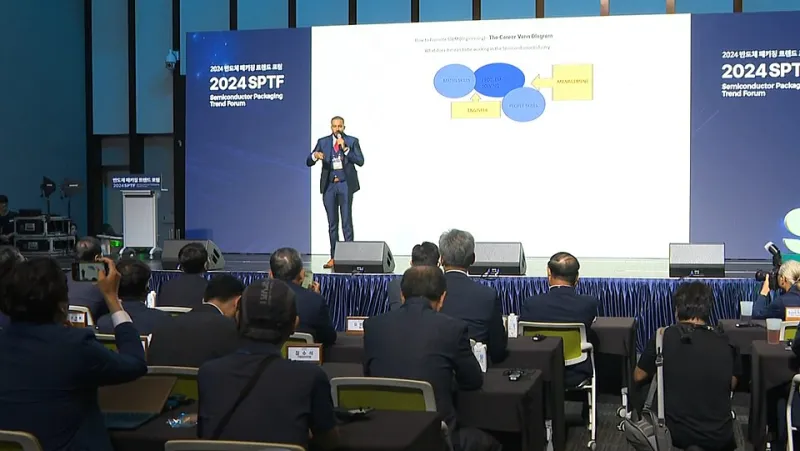
Photo: GTV경기도청방송국, CC BY 3.0, via Wikimedia Commons
When temperatures in Seoul plunge below freezing in January, the city does not simply slow down — it surges. Millions of households crank up their ondol floor heating systems, office towers run HVAC units at full capacity, and the country's vast industrial belt demands an unrelenting supply of electricity to keep production lines moving around the clock. The result is a seasonal stress test that South Korea's aging power infrastructure has, in recent years, been failing with increasing frequency.
For most Americans, a winter blackout in Seoul sounds like a distant inconvenience. It is anything but. South Korea sits at the center of the global semiconductor supply chain, producing a disproportionate share of the memory chips, logic processors, and display panels that power everything from iPhones to data centers in Virginia and Texas. When the lights flicker in Gyeonggi Province, the tremors are felt on Wall Street and in Silicon Valley.
A Grid Under Siege
South Korea's electricity infrastructure was largely constructed during the rapid industrialization of the 1970s and 1980s. Decades of deferred maintenance, combined with explosive growth in both residential and commercial demand, have left the system perpetually operating near its margins during peak winter months. The Korea Electric Power Corporation (KEPCO), the state-owned utility that controls the vast majority of transmission infrastructure, has reported reserve margins dipping dangerously close to minimum thresholds on multiple occasions over the past three winters.
The situation is compounded by Seoul's complicated relationship with nuclear energy. Following public backlash after Japan's Fukushima disaster in 2011, South Korea's government began a phased reduction of its nuclear fleet — a policy that has since been partially reversed, but not before creating structural gaps in baseload generation capacity. Meanwhile, the country's renewable energy buildout, while ambitious on paper, has not yet matured sufficiently to compensate during the low-sunlight, high-demand conditions that define a Korean winter.
The arithmetic is unforgiving: more demand, less reliable supply, and an aging grid caught in the middle.
Semiconductor Fabs Don't Tolerate Brownouts
For Samsung Electronics and SK Hynix — the two companies that together account for roughly two-thirds of global DRAM production — electricity is not merely a utility. It is a precision instrument. The fabrication processes used to manufacture advanced memory chips require extraordinarily stable power delivery. Even a momentary voltage fluctuation can ruin an entire wafer batch, destroying weeks of work and hundreds of thousands of dollars in materials in an instant.
Both companies operate massive fabrication complexes that rank among the largest electricity consumers in the country. Samsung's Pyeongtaek campus alone draws more power than some mid-sized Korean cities. These facilities maintain private backup generation systems precisely because grid reliability cannot be taken for granted — but those systems are designed for emergency bridging, not sustained operation through prolonged shortages.
Industry analysts note that during the winter of 2022 to 2023, several Korean tech manufacturers quietly implemented internal load-shedding protocols, temporarily reducing non-critical operations to protect their most sensitive production lines. These measures were not widely publicized, but their existence signals how seriously the industry views the seasonal risk.
The American Exposure Problem
For US companies, the implications are layered and significant. American technology firms — from cloud giants like Amazon Web Services and Microsoft to consumer electronics brands like Apple — depend on Korean chip production at a scale that cannot be quickly substituted. The specialized nature of advanced semiconductor manufacturing means that no American domestic producer can simply step in to fill a gap created by a Korean supply disruption.
American investors with exposure to Korean tech stocks face a less obvious but equally real risk. Earnings volatility driven by winter production disruptions can be difficult to model because the energy variables involved are highly localized and seasonal. A harsh January in the Korean Peninsula is not a factor that typically appears in standard analyst forecasts prepared in New York or San Francisco.
Beyond direct supply chain exposure, the energy vulnerability is also reshaping the strategic calculus of the US-Korea technology partnership more broadly. The Biden administration's CHIPS and Science Act, which has encouraged greater cooperation between American and Korean semiconductor manufacturers, implicitly assumed a stable Korean industrial foundation. If that foundation proves seasonally unreliable, the policy architecture built on top of it may require significant revision.
Seoul's Response and Its Limits
The South Korean government is not standing idle. The Yoon administration has moved to extend the operational life of several nuclear reactors that had been scheduled for retirement, and the energy ministry has launched a series of demand-management programs targeting large industrial consumers during peak winter hours. KEPCO has also announced accelerated investment in smart grid technology designed to better distribute loads across the national transmission network.
These are meaningful steps, but they are long-term solutions being applied to a near-term problem. Nuclear relicensing is a bureaucratic and regulatory process that unfolds over years, not months. Smart grid infrastructure requires sustained capital investment that a financially strained KEPCO — the company posted record losses in 2022 and 2023 — is struggling to fund.
In the interim, Korean tech companies are pursuing their own hedging strategies. Both Samsung and SK Hynix have accelerated diversification of their manufacturing footprints, with new facilities under development in the United States, Japan, and elsewhere. The US-based projects, partly subsidized through CHIPS Act incentives, will eventually reduce the geographic concentration of critical production. However, those facilities are years away from meaningful output.
A Seasonal Vulnerability With Year-Round Consequences
What makes South Korea's winter energy problem particularly vexing from a policy standpoint is its cyclical nature. The crisis arrives reliably every December, intensifies through January and February, and then recedes as temperatures moderate in March. This predictability might suggest that solutions should be straightforward — but the political economy of energy reform in South Korea is anything but simple.
Electricity pricing, tightly regulated by the government, has historically been kept artificially low to manage public discontent. That pricing structure has suppressed both the investment signals needed to encourage new generation capacity and the conservation incentives that might moderate demand growth. Reforming it carries significant political costs, particularly for a government already navigating a turbulent domestic environment.
For American observers and stakeholders, the takeaway is this: South Korea's winter energy vulnerability is not a temporary anomaly awaiting a quick technical fix. It is a structural condition embedded in decades of policy choices, and it will continue to generate supply chain risk for the foreseeable future. The chips that power American technology run, in part, on a grid that shivers every winter — and that is a fact that US companies, policymakers, and investors can no longer afford to overlook.