Frozen Dockets: How South Korea's Winter Judicial Slowdown Is Costing American Businesses Millions
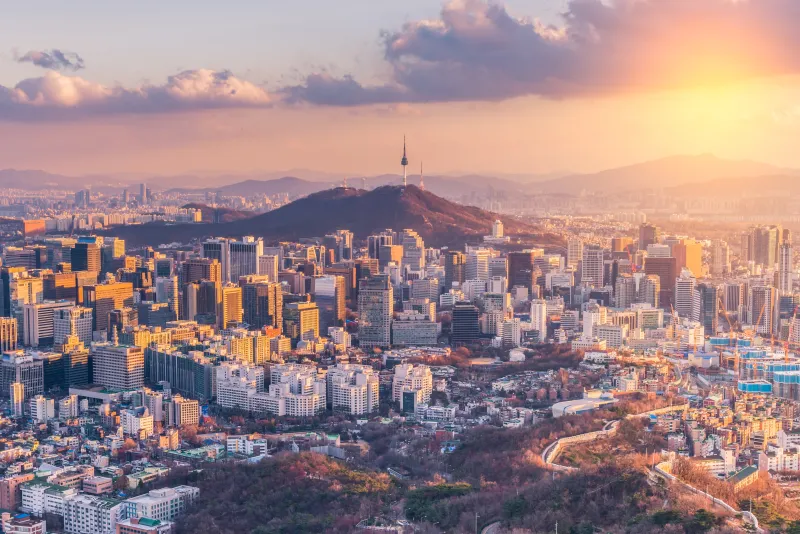
Photo: Seoul courthouse winter snow South Korea legal building, via images.goway.com
For American executives who have spent months building a trade dispute case against a Korean counterpart, few things are more disorienting than watching a legal calendar dissolve into silence somewhere around the third week of December. Emails go unanswered for longer than usual. Filings move at a pace that suggests institutional fatigue rather than deliberate delay. And rulings that were anticipated before the calendar year's close quietly migrate into February or March.
This is not a conspiracy. It is not even, strictly speaking, negligence. It is the predictable consequence of a judicial system colliding with a particularly demanding season — and it has measurable, sometimes painful consequences for the American companies that find themselves caught in its grip.
The Anatomy of a Seasonal Bottleneck
South Korea's court system operates on a schedule that, like many of the country's institutions, reflects the accumulated weight of administrative tradition. The winter period — spanning roughly late November through the Lunar New Year holiday, which typically falls in late January or early February — concentrates a remarkable number of institutional pressures into a compressed window.
Year-end administrative closures, staff rotations at major law firms, mandatory judicial training periods, and the sheer volume of cases requiring resolution before statutory deadlines all converge simultaneously. The Seoul Central District Court, which handles the preponderance of commercially significant litigation in the country, processes thousands of cases at any given time. When institutional bandwidth shrinks, it is the complex, cross-border disputes — precisely the kind involving American plaintiffs or defendants — that tend to slip into the queue.
Add to this the physical realities of Korean winter. Severe cold snaps, which have grown more disruptive in recent years, periodically force courthouse closures or reduced operational hours in older facilities that lack adequate heating infrastructure. While this may sound like a minor inconvenience, for time-sensitive injunctions or emergency arbitration proceedings, even a two-day delay can carry significant commercial weight.
What American Companies Are Actually Losing
The practical stakes are not abstract. Consider the situation facing American technology firms engaged in intellectual property litigation with Korean manufacturers — a category of dispute that has grown substantially as Korean companies have expanded their global footprint in semiconductors, display technology, and consumer electronics.
When a ruling on a preliminary injunction is delayed by six to ten weeks due to winter scheduling constraints, the infringing party — if infringement is ultimately what the court finds — continues operating throughout that window. Revenue is generated. Market share is captured. By the time a favorable ruling arrives in late February, the commercial damage has already been done, and the damages calculation becomes a far more complicated exercise.
Similarly, American agricultural exporters navigating Korea's notoriously complex food safety litigation framework have found that winter delays in regulatory court proceedings can push resolution past the planting or contracting season, effectively nullifying a favorable outcome's practical value even when it eventually arrives.
The Arbitration Mirage
Many American firms, advised by counsel familiar with Korean court delays, have increasingly turned to arbitration as an alternative — specifically the Korean Commercial Arbitration Board, or KCAB, which is widely regarded as a more efficient venue for resolving international commercial disputes.
The KCAB does, in fact, offer meaningful advantages over the general court system in terms of procedural flexibility. However, it is not immune to seasonal pressure. Arbitrator availability contracts noticeably during the winter months, particularly around the Lunar New Year. Hearing schedules that assume steady institutional momentum frequently encounter postponements when arbitrators balance their KCAB commitments against the demands of their primary practices, which themselves surge with year-end workload.
American attorneys who specialize in Korean commercial law have begun building what some informally call "winter buffers" into their arbitration timelines — essentially padding projected hearing dates by four to six weeks to account for the seasonal slowdown. It is a pragmatic adaptation, but it is also a quiet acknowledgment that the calendar is a variable that legal strategy must accommodate.
The US-Korea Trade Framework Complication
The seasonal judicial dynamic carries implications that extend beyond individual commercial disputes. Under the US-Korea Free Trade Agreement, known as KORUS, both governments have committed to ensuring that dispute resolution mechanisms operate with transparency and reasonable efficiency. American trade representatives have periodically flagged concerns about the pace of Korean judicial proceedings in sectors ranging from pharmaceuticals to automotive parts.
Winter bottlenecks feed into a broader narrative that some US trade officials have used to characterize the Korean legal environment as structurally inhospitable to foreign plaintiffs — a characterization that Korean legal authorities contest, pointing to reforms implemented over the past decade that have substantially modernized court administration.
The tension is real, even if the framing on both sides is sometimes overstated. What is clear is that the seasonal dimension of Korean judicial performance adds an unpredictability layer that American companies operating under quarterly earnings pressure find genuinely difficult to manage.
Timing as Strategy
For American businesses either currently engaged in Korean litigation or contemplating it, the seasonal calendar is not merely background information — it is a strategic variable. Legal practitioners with deep Korea experience consistently advise clients to avoid initiating major proceedings in October or November if the goal is a resolution within the fiscal year. Filings made in that window almost invariably carry over into the following spring, regardless of the underlying merits.
Conversely, the post-Lunar New Year period — typically mid-February onward — represents something of a judicial reset. Courts clear their accumulated backlog with notable efficiency in the early months of the new year, and cases that have been waiting in the queue frequently receive substantive attention. For American companies willing to plan around the seasonal rhythm, this window can represent an opportunity to push for accelerated resolution.
Some US firms have also begun engaging Korean legal counsel earlier in the autumn — before the winter slowdown takes hold — specifically to ensure that procedural groundwork is fully laid before institutional bandwidth contracts. It is a modest adjustment, but in a legal environment where timing can mean the difference between an injunction that matters and one that arrives too late, modest adjustments carry outsized consequences.
Reading the Cold
South Korea's winter does not merely reshape the country's political landscape and social rhythms — it reaches into the machinery of its legal system with the same quiet authority. For American businesses, the lesson is one that Winter News Korea has observed across nearly every dimension of Korean institutional life: the season is not a backdrop. It is a participant.
Understanding how Korean courts breathe through winter — where they slow, where they accelerate, and where they simply pause — is no longer optional knowledge for American companies with material interests on the peninsula. It is due diligence. And in the current trade environment, where the margin between a favorable ruling and a costly delay can determine whether a market position is won or lost, that knowledge may be among the most valuable investments an American firm can make.