The Season of Confessions: Why South Korea's Corporate Scandals Erupt When Temperatures Drop
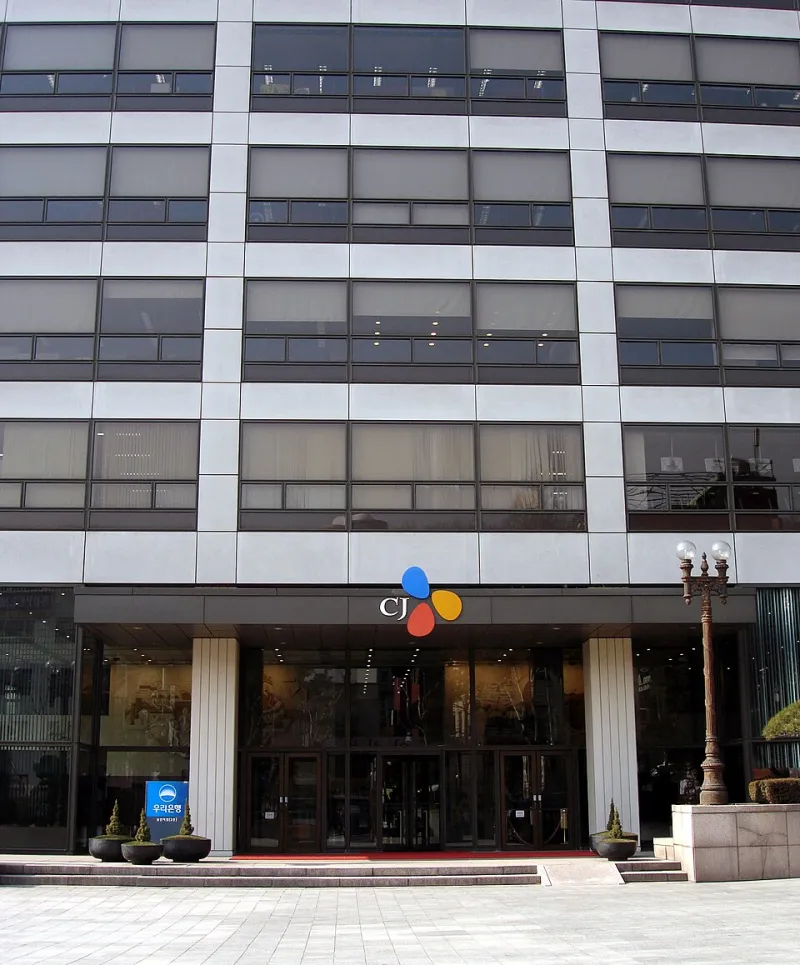
Photo: JeongAhn, Public domain, via Wikimedia Commons
Every December, as Seoul's Han River stiffens with cold and the city's financial district empties out for year-end ceremonies, something else begins to stir beneath the surface of South Korea's corporate world. Regulatory inboxes fill. Anonymous tip lines spike. And somewhere in the fluorescent corridors of a mid-sized conglomerate or a second-tier subsidiary of one of the country's sprawling chaebol empires, an employee who has spent months — sometimes years — sitting on damaging information finally decides to act.
This is not coincidence. It is a pattern, and it is one that governance researchers, former prosecutors, and labor advocates in South Korea have been quietly documenting for over a decade.
A Calendar of Accountability
The concentration of corporate whistleblower activity in the November-through-February window is well-documented among practitioners in South Korea's financial regulatory ecosystem. The country's Financial Supervisory Service and the Board of Audit and Inspection both report elevated volumes of internal disclosures during this period, a trend that holds across sectors from construction and pharmaceuticals to logistics and entertainment.
The reasons are structural as much as they are seasonal. South Korean corporations operate on fiscal and personnel cycles that create natural pressure points in the final quarter. Annual performance reviews are conducted, bonuses are calculated, and — critically — organizational reshuffles are planned. For employees who have witnessed financial misconduct, the prospect of being transferred, demoted, or quietly pushed out in a January restructuring creates a powerful incentive to act before the window closes.
"There is a very specific calculus at work," explains one former Seoul Prosecutor's Office investigator, speaking on background. "The person holding sensitive information knows that if they are moved to a different division, they lose access to the documents. They lose the colleagues who can corroborate their account. Winter becomes the last practical moment to come forward."
The Psychology of the Cold Season
Beyond institutional mechanics, there is a psychological dimension to winter's role in Korean corporate disclosure that deserves serious attention. Korean workplace culture, shaped in part by Confucian norms around hierarchy and collective harmony, places enormous informal pressure on employees to absorb rather than report internal wrongdoing. The concept of nunchi — a finely tuned social awareness of how one's actions affect group dynamics — operates as a powerful suppressor of individual dissent throughout most of the year.
Winter disrupts that equilibrium. The extended holiday period surrounding Christmas, the Lunar New Year preparation, and the general psychological reckoning that accompanies the calendar's end all contribute to what one Seoul-based organizational psychologist describes as "a loosening of the social contract." People reflect. They reassess their loyalties. They confront the gap between what they have witnessed and what they have been willing to accept.
This introspective pressure is compounded by the physical reality of Korean winters, which are genuinely harsh. Extended periods indoors, reduced social activity, and the particular isolation of Seoul's coldest months create conditions in which internal moral conflicts — long suppressed by the rhythms of a busy professional life — become harder to ignore.
Chaebol Culture and the Year-End Reckoning
The chaebol structure, South Korea's distinctive model of family-controlled industrial conglomerates, adds another layer of complexity to winter's role in corporate accountability. These organizations are notorious for operating with multiple sets of financial records, informal slush funds, and compensation arrangements that exist entirely outside official documentation. The individuals who maintain these shadow systems — mid-level accountants, executive assistants, compliance officers nominally tasked with oversight — accumulate knowledge that becomes increasingly dangerous to hold.
Year-end audits, whether internal or regulatory, represent the moment when that knowledge is most likely to surface. Auditors ask questions that cannot be deflected with the same ease as routine inquiries. External accounting firms, under pressure from their own regulatory obligations, probe more aggressively. And employees who have been quietly shielding executives from scrutiny begin to calculate whether their loyalty is worth the personal legal exposure.
Several of South Korea's most consequential corporate scandals of the past fifteen years — including major embezzlement cases involving subsidiaries of household-name conglomerates — were initially triggered by disclosures made between November and February. Prosecutors familiar with these cases note that the timing was rarely accidental.
The American Contrast
For American readers, this seasonal pattern may seem counterintuitive. In the United States, corporate whistleblower activity tends to cluster around different institutional triggers: Securities and Exchange Commission enforcement cycles, the filing of quarterly earnings reports, and the aftermath of major market events. The American system, shaped by the Sarbanes-Oxley Act and the Dodd-Frank whistleblower incentive program, has built financial rewards into the disclosure process — a mechanism that partially decouples the timing of disclosures from the cultural and organizational pressures that dominate in Korea.
The Dodd-Frank program, which awards whistleblowers a percentage of sanctions collected in cases exceeding one million dollars, has generated billions in recoveries since its 2010 inception. It has also produced a disclosure ecosystem in which legal strategy — rather than seasonal psychology or organizational calendar pressure — largely determines when and how information surfaces.
That difference matters. The Korean model, for all its inefficiencies, produces disclosures that are often more organizationally embedded and documentarily rich than their American counterparts. Whistleblowers who come forward after years of proximity to misconduct tend to carry more comprehensive evidence. The cost, however, is that the same cultural pressures that delay disclosure also deter it entirely in a significant number of cases.
Regulatory Pressure and the Winter Enforcement Window
South Korea's regulatory calendar reinforces the seasonal disclosure pattern from the institutional side as well. The country's Financial Supervisory Service typically increases its on-site examination activity in the fourth quarter, a scheduling reality that places regulators inside corporate offices precisely when internal informants are most likely to be weighing their options. The proximity of enforcement personnel to potential sources is not incidental to the disclosure spike — it is part of the mechanism.
American regulators have periodically experimented with similar approaches, concentrating examination resources around high-risk periods. But the United States' larger and more fragmented corporate landscape makes the kind of concentrated seasonal enforcement pressure that characterizes the Korean system difficult to replicate at scale.
What the Pattern Reveals
The winter concentration of South Korean corporate scandals is ultimately a mirror held up to the country's broader political economy. It reflects an accountability system that remains heavily dependent on individual courage, institutional timing, and the particular psychological weight of the calendar's end — rather than on the kind of continuous, incentive-driven disclosure infrastructure that characterizes the American approach.
For governance reformers in Seoul, the seasonal clustering of whistleblower activity is simultaneously a vindication of existing pressure points and an indictment of the system's inability to generate accountability year-round. For American observers, it is a reminder that the mechanics of corporate transparency are always embedded in cultural and institutional contexts that resist easy export.
Winter, in South Korea, does not merely bring cold. It brings a particular kind of clarity — one that the country's corporate establishment has learned to dread, and that its regulatory bodies have learned to anticipate.