Defying the Freeze: How South Korea's Winter Streets Became the World's Most Effective Political Classroom
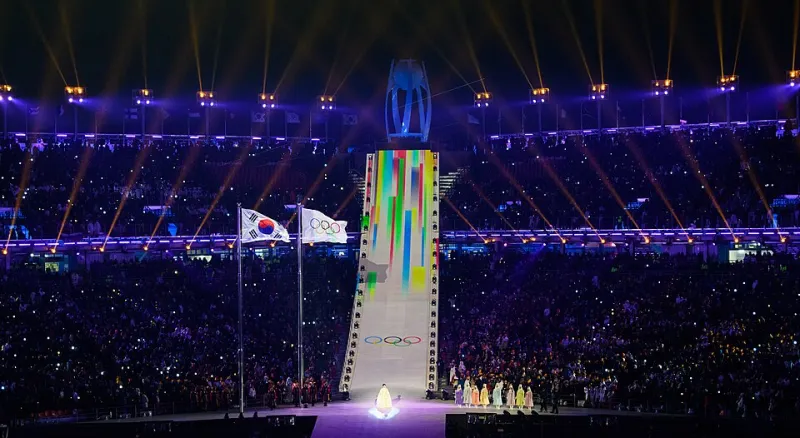
Photo: Korea.net, CC BY-SA 2.0, via Wikimedia Commons
When temperatures in Seoul plunge below freezing and the Han River begins its annual retreat beneath a skin of ice, most political strategists would counsel restraint. Mobilizing citizens in subzero conditions, conventional wisdom suggests, is a recipe for diminishing turnout and diluted messaging. South Korea's protest movement has spent decades proving that conventional wisdom wrong.
From the candlelight vigils that brought down President Park Geun-hye in the winter of 2016 and 2017, to the more recent demonstrations surrounding the brief declaration of martial law in December 2024, South Korea's most seismic moments of civic pressure have arrived not in the comfortable warmth of spring or summer, but in the bitterest stretch of the calendar year. This is not coincidence. It is the product of deliberate strategy, hard-won organizational experience, and a cultural relationship with winter that American activists have yet to fully appreciate.
Why Winter Amplifies Political Urgency in Korea
Understanding why South Korea's protest culture thrives in cold weather requires understanding the country's political calendar. Budget negotiations, year-end parliamentary sessions, and the formal conclusion of the National Assembly's legislative term all converge in November and December, creating a natural concentration of political stakes. When grievances reach a boiling point, they tend to do so precisely when the mercury is falling.
There is also a psychological dimension that Korean organizers have learned to exploit. Winter strips away the casual participant. Those who brave temperatures that regularly dip below 14 degrees Fahrenheit in central Seoul are, by definition, demonstrating a level of commitment that fair-weather protest cannot replicate. The hardship itself becomes a signal — to the government, to the media, and to the international community — that the movement's demands are not performative. Suffering in the cold confers moral authority in a way that a pleasant Saturday afternoon rally simply cannot.
This dynamic was on full display during the 2016 candlelight protests, when millions of South Koreans gathered across successive winter weekends, holding flickering flames against the wind to demand accountability from a sitting president. The image of ordinary citizens refusing to yield to either governmental pressure or bitter cold carried a narrative weight that transcended domestic politics. It became a global symbol of democratic resilience.
The Tactical Innovations That Make It Work
South Korean activists have not simply endured winter conditions — they have engineered around them with impressive creativity. Several tactical developments stand out as particularly instructive.
Rotating rally structures allow protest organizers to maintain a visible presence over extended periods without exhausting any single group of participants. Rather than demanding that supporters remain stationary for hours, Korean demonstrations frequently employ a wave system in which different civic organizations, labor unions, religious groups, and regional coalitions arrive, march, and cycle out in coordinated shifts. The crowd remains large and energetic; the individual burden remains manageable.
Infrastructure investment has also become a hallmark of Korean winter activism. Protest organizers routinely arrange portable heating stations, distribute hand warmers and insulated gear, and establish rest areas along demonstration routes where participants can warm themselves before rejoining the crowd. Far from being logistical afterthoughts, these provisions are treated as core components of event planning — essential to sustaining participation across multiple consecutive weekends.
Cultural programming transforms demonstrations into something closer to community gatherings. Live performances, traditional music, food vendors, and organized childcare areas have all appeared at major Korean winter protests, lowering the barrier to participation for families and older citizens who might otherwise stay home. The result is a protest culture that feels less like an ordeal and more like an act of collective belonging — which, paradoxically, makes it more politically formidable.
Digital Coordination as a Winter Force Multiplier
South Korea's exceptionally high smartphone penetration and the dominance of platforms such as KakaoTalk have allowed protest organizers to maintain real-time coordination in ways that would have been unimaginable a generation ago. Weather forecasts are distributed to participants hours in advance, allowing individuals to dress appropriately. Route adjustments can be communicated instantly when wind chill or unexpected snowfall creates hazardous conditions along planned march paths.
Perhaps more significantly, digital infrastructure allows Korean activists to maintain political pressure even on nights when outdoor conditions make mass gatherings impractical. Online petition drives, synchronized social media campaigns, and coordinated parliamentary contact initiatives have all served as cold-weather substitutes for street presence, ensuring that momentum does not dissipate between demonstrations.
What American Movements Can Take From the Seoul Model
The United States has its own rich tradition of winter protest, from the civil rights marches that continued through the cold months of the early 1960s to the Women's March that launched in January 2017 under a gray Washington sky. But American activist organizations have generally treated winter as an obstacle to be overcome rather than a resource to be leveraged.
The Korean experience suggests a different orientation. The self-selecting quality of cold-weather protest — the fact that it filters out the uncommitted — can be framed publicly as evidence of a movement's depth and seriousness. American organizers who invest in the logistical infrastructure necessary to make winter demonstrations genuinely accessible, rather than merely survivable, stand to benefit from the same moral amplification that has made Seoul's frozen streets so politically potent.
There are, of course, meaningful differences. American protests are more geographically dispersed, and the country lacks Korea's tradition of concentrated, multi-week, weekend demonstrations in a single major urban center. Coordinating the kind of sustained winter campaign that Korean activists have mastered across a country of 330 million people presents challenges that Seoul's organizers have not faced.
Nevertheless, the core strategic insight translates cleanly: winter does not weaken a movement that prepares for it. It strengthens one.
The Seasonal Rhythm of Democratic Accountability
South Korea's protest tradition offers a broader lesson about the relationship between seasons and civic life. Political systems are not static institutions — they breathe, contract, and expand in response to the rhythms of the calendar. In Korea, winter has become the season when democratic accountability is most vigorously exercised, not despite the cold, but in some meaningful sense because of it.
For American observers watching from a distance, the spectacle of hundreds of thousands of Koreans standing in subzero darkness, candles in hand, demanding answers from their government, can seem both foreign and deeply familiar. The specific context differs. The underlying impulse — the refusal to let institutional failure go unchallenged simply because conditions are difficult — is universal.
As the United States enters its own periods of political turbulence, the Seoul protest playbook deserves careful study. The cold, it turns out, is not the enemy of democratic movements. Properly understood, it may be one of their most reliable allies.