Snow, Spreadsheets, and Scrutiny: The Political Logic Behind South Korea's Winter Tax Crackdowns
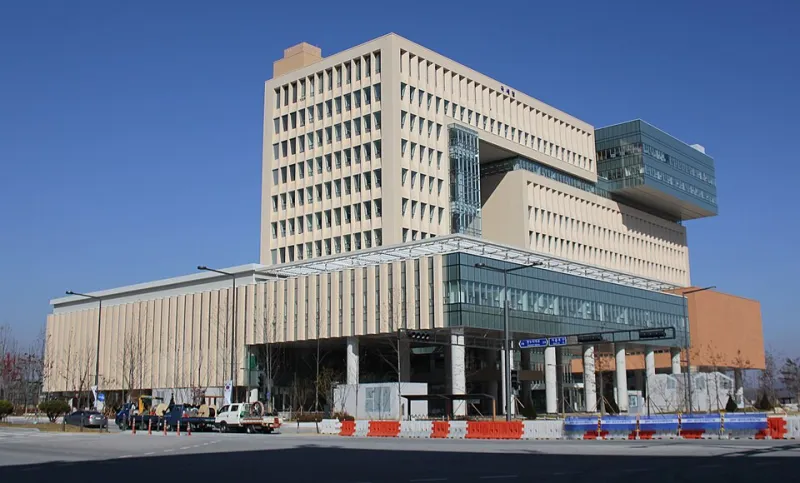
Photo: Minseong Kim, CC BY-SA 4.0, via Wikimedia Commons
Every year, as temperatures in Seoul plunge below freezing, South Korea's National Tax Service quietly shifts into high gear. A pattern of intensified audits, enforcement actions, and corporate compliance sweeps during the winter months reveals far more than bureaucratic scheduling — it exposes the deep fiscal pressures and political incentives that govern how modern states extract revenue. For American observers navigating their own tax season anxieties, the lessons from Seoul's winter enforcement machinery are both instructive and sobering.
The Seasonal Anatomy of a Crackdown
South Korea's fiscal year concludes on December 31, a deadline that carries enormous institutional weight. In the weeks leading up to year-end, the National Tax Service — known domestically as the NTS — accelerates its audit calendar with a deliberateness that insiders describe as anything but coincidental. Corporate tax filings, value-added tax reconciliations, and transfer pricing reviews all converge on a compressed winter timeline, creating what one Seoul-based tax attorney characterized as "a pressure cooker of compliance activity."
The mechanics are straightforward: the NTS must demonstrate to the Ministry of Economy and Finance that revenue targets are being met before the books close. When projections fall short — as they frequently do during economic slowdowns — enforcement becomes the most immediate lever available. Audits that might otherwise be deferred to spring are accelerated. Notices that sat in bureaucratic queues are dispatched in bulk. The result is a winter enforcement surge that catches businesses, high-net-worth individuals, and foreign-invested enterprises alike in its widening net.
This is not merely administrative housekeeping. It is fiscal politics in its most concentrated form.
Revenue Gaps and Political Cover
To understand why winter enforcement intensifies so reliably, one must appreciate the political environment surrounding South Korea's annual budget cycle. The National Assembly debates and approves the following year's budget in the final months of the calendar year, a process that runs almost precisely parallel to the NTS's enforcement surge. Politicians negotiating spending priorities have every incentive to signal fiscal discipline — and nothing communicates that discipline more visibly than a headline-grabbing crackdown on corporate tax evasion.
The optics are particularly potent in a country where public trust in large conglomerates, the chaebol, remains perpetually fragile. Announcing audits of major corporations during winter — when citizens are already primed by cold weather and year-end economic stress to scrutinize inequality — generates political goodwill at relatively low cost. The enforcement action becomes a performance as much as a fiscal instrument, reassuring ordinary Koreans that the tax burden is being shared equitably even as household heating bills climb.
This dynamic is not unique to South Korea. American observers will recognize a parallel logic in the Internal Revenue Service's own enforcement calendar, though the mechanisms differ. The IRS tends to front-load its audit activity in the months following the April filing deadline, while Congress periodically demands visible enforcement actions against wealthy taxpayers or corporate offenders during periods of fiscal strain. The underlying political grammar is identical: enforcement as theater, crackdown as reassurance.
The Compliance Burden on Foreign Business
For American companies operating in South Korea — and there are thousands, spanning technology, manufacturing, financial services, and consumer goods — the winter enforcement cycle creates a specific and often underappreciated compliance burden. Transfer pricing arrangements, which govern how multinational firms allocate profits between Korean subsidiaries and parent companies, receive heightened scrutiny during this period. The NTS has developed sophisticated analytical tools to identify discrepancies between declared transfer prices and arm's-length benchmarks, and winter is when those tools get deployed most aggressively.
Several U.S. multinationals have faced substantial assessments in recent years following NTS audits initiated in the November-to-January window. The financial exposure can be significant: South Korea's corporate tax rates are competitive by OECD standards, but penalties for transfer pricing adjustments can reach 40 percent of the underpaid amount, with interest accruing from the original filing date. For companies that treat Korean compliance as a secondary priority relative to their home-country obligations, the winter audit season can deliver an expensive education.
American tax advisors working with clients who have Korean operations increasingly recommend completing internal compliance reviews by October — well before the NTS enforcement machinery reaches full speed.
What Seoul's Winter Calendar Reveals About Fiscal Design
The broader significance of South Korea's winter tax enforcement pattern lies in what it exposes about the architecture of modern fiscal governance. Revenue collection is rarely the neutral, technocratic process that official communications suggest. It is shaped by political calendars, budget pressures, institutional incentives, and the need to project competence to restive publics.
South Korea's system is notable for the degree to which these pressures have become embedded in a seasonal rhythm. The NTS operates with a level of institutional autonomy that allows it to calibrate enforcement intensity in response to revenue gaps without requiring explicit political direction — a kind of fiscal autopilot that activates when the numbers demand it. This design insulates individual politicians from direct accountability for enforcement decisions while ensuring that the state's revenue needs are reliably served.
The United States faces a structurally different challenge. The IRS has operated under sustained resource constraints for more than a decade, with audit rates for high-income individuals and corporations declining sharply from their early-2000s peaks. The Inflation Reduction Act of 2022 allocated substantial new funding to the agency, explicitly targeting enforcement capacity — a political decision that mirrors, in its own way, the Korean logic of using tax enforcement to signal fiscal seriousness during periods of public concern about deficits and inequality.
Cold Weather, Hot Enforcement, and the American Parallel
For American readers, the Korean winter audit season offers a useful mirror. Both countries grapple with the tension between the administrative ideal of consistent, calendar-neutral enforcement and the political reality that governments intensify scrutiny when fiscal pressures peak. In South Korea, that peak reliably arrives with the first snowfall. In the United States, it tends to cluster around filing deadlines and congressional budget battles.
What distinguishes the Korean model is its transparency — not in the sense of official disclosure, but in the sense that the pattern has become so predictable that sophisticated taxpayers plan around it. Korean corporate tax departments treat the October-to-December window as a compliance season in its own right, conducting internal audits and preparing documentation packages before the NTS comes calling.
There is a lesson in that preparation. As the IRS rebuilds its enforcement capacity and American fiscal politics grow more contentious, the seasonality of scrutiny is likely to intensify stateside as well. Understanding that tax enforcement is never purely administrative — that it is always, at some level, a political act shaped by the calendar and the budget — is the first step toward navigating it intelligently.
In Seoul, the snow has a way of making that truth impossible to ignore.