Who Clears the Snow From the School Run? Korea's Winter Closure Decisions
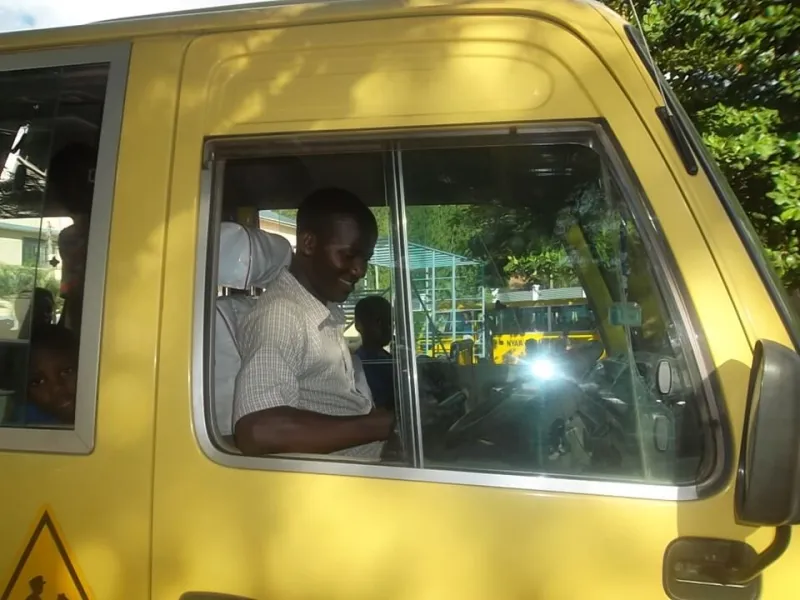
Photo: Happiness Wilbert, CC BY-SA 4.0, via Wikimedia Commons
A snow day looks like a simple decision from the outside: the roads are bad, so the schools close. In South Korea, as in the United States, the reality is more complicated. Education offices must weigh forecasts against bus routes, heating systems against budgets, and remote-learning plans against the needs of families who depend on schools for meals, childcare, and warmth. As winter approaches in 2026, the closure decision is local politics in its most visible form.
The decision is local
South Korea's education system is centralized in many respects, but winter closure decisions are made at the regional and local level. Metropolitan and provincial education offices set guidelines, while individual schools and districts interpret them in light of conditions on the ground. The criteria are rarely reducible to a single temperature. Officials consider road conditions, public transportation, school bus safety, heating capacity, and the age of students.
That discretion is necessary. A coastal city may clear its streets quickly while a rural county struggles with icy secondary roads. An older school may have unreliable heating while a newer one does not. A district with many students who commute long distances faces a different risk calculation than an urban district where most students walk or take public transit.
The hidden costs of a snow day
The closure decision is often framed as a safety issue, and it is. But it is also a distributional issue. When schools close, parents must arrange childcare. Low-income families may lose access to school meals. Rural students may face longer disruptions because bus service is limited or canceled. Students with disabilities may lose specialized support. Teachers and staff may still be expected to report to work, even when students stay home.
In the United States, these tensions are familiar. Snow days can expose gaps in childcare, food assistance, and broadband access. They can also reveal which neighborhoods are prioritized for plowing. The same is true in Korea, where winter closure decisions can sharpen the divide between well-resourced urban districts and struggling rural ones.
Remote learning is not a neutral substitute
South Korea has strong digital infrastructure, but remote learning is not a simple swap for in-person school. Younger students may need supervision. Special education services may be difficult to deliver online. Rural broadband can be unreliable. Teachers may have little time to prepare a remote day, especially when the decision is made early in the morning.
American districts learned similar lessons during the pandemic, and many still struggle with the same questions. A remote-learning day can preserve instructional time, but it can also shift costs onto families and widen gaps for students who lack devices, quiet space, or reliable internet. The decision to switch to remote learning is therefore not just a technical choice; it is a statement about who is expected to absorb the disruption.
What American school boards can learn
The most useful lesson from Korea's winter closure decisions is procedural. Clear criteria help. Published thresholds for delays and closures, early communication with families, and coordination with transportation and heating officials can reduce confusion. So can planning for meals, childcare, and remote learning before the first snow.
But the deeper lesson is political. Winter closure policy is where local governments reveal their priorities. A district that closes schools quickly may be protecting students, or it may be avoiding the cost of keeping buildings warm. A district that stays open may be preserving instruction, or it may be ignoring the risks faced by rural commuters. The decision itself is a form of accountability.
In both Korea and the United States, the snow day is not a break from politics. It is a test of how local institutions balance safety, cost, and equity when the weather turns. The answer is rarely found in a single thermometer reading. It is found in the choices officials make before the storm arrives.