When Blizzards Blow, Seoul's Tax Collectors Go to Work: Inside South Korea's Winter Enforcement Calendar
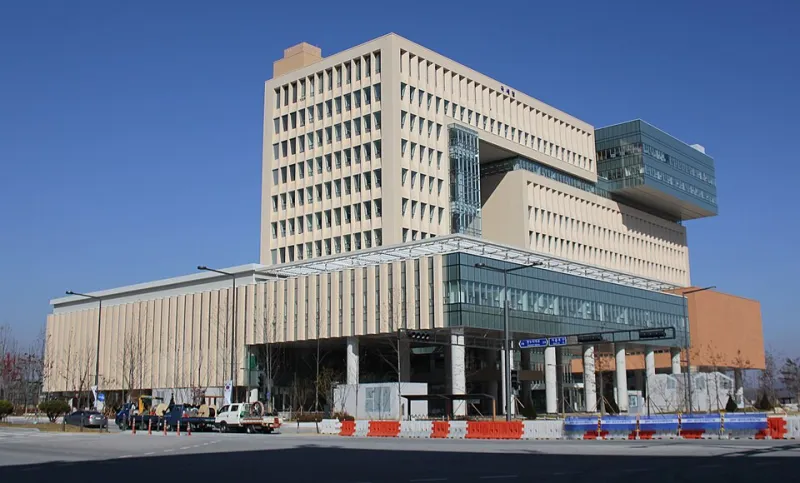
Photo: Unknown authorUnknown author, Public domain, via Wikimedia Commons
There is a particular kind of silence that descends on Seoul during a heavy snowfall — streets emptied, traffic stilled, the city's usual roar reduced to a muffled hush. For most residents, that silence signals a day of disrupted commutes and canceled plans. For officials at South Korea's National Tax Service (NTS), it signals something else entirely: an opportunity.
Documents reviewed by Winter News Korea, alongside candid assessments from current and former NTS personnel, point to a well-established but rarely discussed institutional pattern. The agency's most consequential audit operations — the ones targeting large corporate entities, high-net-worth individuals, and politically connected business groups — are disproportionately launched or escalated during the peninsula's coldest and most weather-disrupted months. The logic, once unpacked, is less mysterious than it first appears.
The Bureaucratic Arithmetic of Winter Enforcement
South Korea's fiscal year closes on December 31, a deadline that compresses the NTS's annual enforcement calendar in ways that have no direct American equivalent. Unlike the U.S. Internal Revenue Service, which operates against a sprawling April tax season and a relatively diffuse enforcement schedule, the NTS must reconcile its investigative ambitions with a hard year-end accounting. That compression, paradoxically, creates intensity rather than paralysis.
By November, NTS audit teams have typically completed the preliminary review phases of their largest investigations — the document requests, the cross-referencing of corporate filings, the quiet interviews with mid-level finance staff. What remains, heading into December and January, is the confrontational phase: the formal notices, the on-site examinations, the legally consequential determinations. And it is precisely here that winter weather becomes an unexpected administrative ally.
When roads ice over and blizzard warnings are issued, corporate executives and their legal representatives face genuine logistical obstacles to mounting rapid responses. Law firms operate at reduced capacity. Financial advisers are slower to mobilize. The informal networks of personal contact that ordinarily allow wealthy subjects of investigation to manage bureaucratic pressure — the phone calls, the lunches, the quiet intermediary conversations — become harder to activate when the city is functionally frozen. NTS teams, operating from centralized facilities with dedicated transport arrangements, face no equivalent disruption.
"There is an institutional awareness that the window between mid-December and late January is when our leverage is highest," one former senior NTS official, speaking on condition of anonymity, told Winter News Korea. "It is not written in any manual. But it is understood."
The Political Calendar's Invisible Hand
Weather alone does not explain the winter enforcement surge. South Korea's political calendar plays an equally significant role in shaping when the NTS chooses to act boldly and when it exercises restraint.
The period immediately following a presidential inauguration or a major parliamentary election tends to produce enforcement energy at the NTS. New administrations arrive with reform mandates and a hunger for visible accountability. Tax crackdowns on the business groups associated with the previous government — or on sectors the new leadership has identified as emblematic of systemic unfairness — serve as early political signals. Winter, which frequently coincides with post-election transition periods in South Korea, becomes the season in which those signals are sent.
Conversely, the NTS tends toward caution in the months immediately preceding major elections. Aggressive enforcement actions carry political risk: they can be characterized as persecution of business, or as an overreach by a lame-duck government attempting to settle scores. Winter, arriving after election seasons have concluded and before the next campaign cycle begins to heat up, represents a relative window of political safety for enforcement ambition.
This dynamic is not entirely alien to American observers. The IRS has faced longstanding accusations — from both the left and the right, at various historical moments — of allowing political considerations to shape audit targeting. What distinguishes the South Korean model is not the presence of political influence, but its apparent systematization. The NTS appears to have internalized the political calendar as a legitimate variable in enforcement planning, rather than treating political neutrality as an absolute institutional obligation.
What Leaked Scheduling Data Suggests
Internal NTS scheduling documents, portions of which have circulated among South Korean tax attorneys and been reviewed by this publication, show a consistent pattern over the past decade. Formal audit initiation notices — the documents that officially begin a comprehensive examination of a taxpayer's records — spike sharply in December and again in January. The December surge correlates with year-end fiscal deadlines. The January surge is harder to explain through purely administrative logic, and former officials suggest it reflects deliberate strategic timing: the new year arrives, political transitions are in motion, and the NTS moves while conditions are favorable.
The documents also reveal a geographic concentration of winter enforcement activity in Seoul and the surrounding Gyeonggi province — areas where the largest corporate headquarters are located and where winter weather conditions are most disruptive to normal business operations. Regional offices in warmer southern cities show less pronounced seasonal enforcement patterns, a finding consistent with the theory that weather disruption is a genuine operational factor rather than mere coincidence.
Lessons for the American Tax Enforcement Apparatus
For American readers, the South Korean winter enforcement model raises a question worth taking seriously: is the IRS leaving strategic value on the table by treating its enforcement calendar as primarily a function of administrative convenience rather than tactical opportunity?
The IRS currently concentrates much of its enforcement communication around the spring tax filing season — a period when American taxpayers are already primed to engage with fiscal matters, but also a period when the agency's administrative bandwidth is most severely strained. The result is a paradox in which enforcement visibility peaks precisely when enforcement capacity is most constrained.
A winter enforcement surge, modeled loosely on the NTS approach, could theoretically allow the IRS to concentrate its highest-stakes audit operations in the months of January and February — after holiday disruptions have passed, before the spring filing rush begins, and during a period when the political calendar is often relatively quiet. The logistical obstacles that winter weather creates for audit subjects would be less pronounced in the United States than in Seoul, given America's greater geographic and climatic diversity. But the underlying bureaucratic logic — concentrate your most demanding enforcement work in periods of relative operational advantage — translates across contexts.
The Cold as a Governance Tool
South Korea's winter tax enforcement pattern is, at its core, a story about how environmental conditions shape institutional behavior in ways that formal policy documents rarely acknowledge. The NTS did not issue a directive ordering its investigators to time their biggest moves to coincide with blizzards. What emerged instead was an institutional culture attuned to the rhythms of the season — one that recognized, through accumulated experience, that frozen streets and truncated business hours create enforcement advantages that warm-weather months simply cannot replicate.
For a country that has spent decades building one of Asia's most sophisticated fiscal bureaucracies, that attunement is perhaps unsurprising. South Korea's political and administrative culture has long demonstrated an ability to convert seasonal conditions into governance instruments — from the kimjang community networks that once served as informal welfare infrastructure to the winter festival calendars that double as civic mobilization tools.
The tax enforcement calendar is simply the latest, and perhaps most consequential, expression of that seasonal governance logic. And as American fiscal authorities grapple with chronic enforcement gaps and a persistent perception that the wealthy face fewer audit consequences than ordinary filers, Seoul's winter playbook deserves a serious read — even if the reading must wait until the snow melts.