Caught Off Guard by the Cold: How American Tech Giants Keep Fumbling South Korea's Winter Policy Cycle
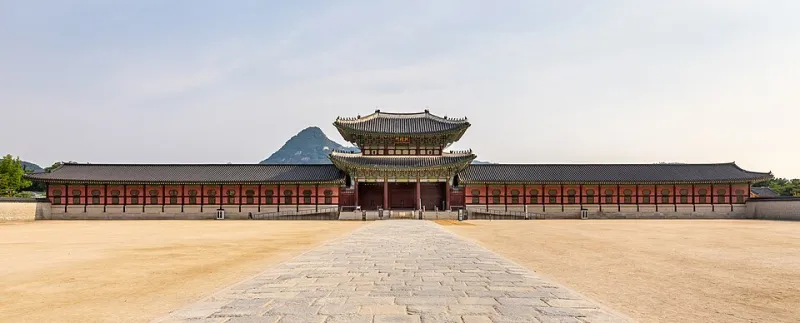
Photo: Basile Morin, CC BY-SA 4.0, via Wikimedia Commons
Every December, as temperatures drop across the Korean Peninsula and Seoul's Han River edges toward its annual freeze, something equally reliable happens inside South Korea's government ministries, labor unions, and corporate boardrooms: the machinery of consequential change kicks into gear. Regulatory reviews accelerate. Labor contracts expire and negotiations intensify. Corporate restructurings, often deferred through the warmer months, reach their conclusions under the pressure of fiscal year-end deadlines.
For companies headquartered in San Jose, Seattle, or Austin, none of this is intuitive. American business culture tends to treat December as a period of wind-down — a holiday interlude before the real work resumes in January. In South Korea, that assumption is not merely wrong. It is expensive.
The Seasonal Architecture of Korean Policy
South Korea's political and regulatory calendar is shaped by forces that have accumulated over decades. The National Assembly's legislative session reaches its most productive — and most turbulent — phase between December and February. Budget appropriations, tax code amendments, and sector-specific regulations that have been debated through the autumn frequently receive their final votes during the coldest weeks of the year.
Labor law in particular follows a winter rhythm. Many of South Korea's largest collective bargaining agreements are structured around the calendar year, meaning that contract renewals, wage negotiations, and potential industrial actions cluster in the November-through-January window. For a technology company operating a significant workforce in the country — whether in semiconductor manufacturing, platform services, or research and development — failure to track this cycle in advance can mean being caught in a labor dispute with no contingency plan in place.
Korean corporate governance adds another layer. The country's dominant conglomerates, the chaebol, have historically used the year-end period to execute major internal restructurings: subsidiary mergers, leadership transitions, and shifts in strategic partnerships. For American firms whose Korean market strategy depends on relationships with these conglomerates, a restructuring that eliminates or repositions a key partner division can arrive with little warning — unless the company has been watching the seasonal signals.
Case Studies in Miscalculation
The pattern of American tech firms being caught off-guard is not hypothetical. Several well-documented episodes illustrate the cost of seasonal blindness.
In the e-commerce sector, at least two major US platform companies have sought to expand their logistics partnerships in South Korea only to find that the domestic firms they were targeting were simultaneously navigating labor contract renewals that froze their capacity for new agreements. The American companies, operating on timelines set by headquarters in the United States, had not accounted for the fact that their Korean counterparts were functionally unavailable for major partnership decisions during a six-week negotiation window.
In the technology hardware space, American firms relying on Korean component suppliers have repeatedly discovered that production capacity commitments made in the autumn were subject to revision once year-end government procurement priorities — which are finalized in the winter budget cycle — reshaped domestic demand. Companies that had not built buffer into their supply assumptions faced cascading delays.
Perhaps most consequential has been the regulatory dimension. South Korea's Personal Information Protection Commission, the Korea Communications Commission, and the Fair Trade Commission all tend to finalize major enforcement actions and publish new compliance guidelines in the first quarter of the calendar year, following internal reviews conducted during the winter months. American technology companies that were not monitoring these review processes — and that had not positioned their government affairs teams to engage during the consultation phase — found themselves reacting to new rules rather than helping to shape them.
The Intelligence Gap
Why does this pattern persist? Executives and analysts who have worked across both markets point to several structural explanations.
First, American technology companies tend to staff their Korea operations primarily with operational personnel rather than political and regulatory intelligence specialists. The assumption is that legal compliance can be handled reactively, through outside counsel, when issues arise. This model works adequately in a regulatory environment that moves on a predictable, visible timeline — but it systematically fails to capture the informal signals, ministry briefings, and legislative committee discussions that precede formal rule changes in Seoul.
Second, the cultural translation problem is real. Korean business culture communicates significant information through channels that are opaque to executives who have not built sustained relationships in the market. A chaebol partner signaling its intention to restructure a division will do so through a series of subtle, relationship-mediated communications long before any public announcement. American companies without deep local networks simply do not receive those signals.
Third, and perhaps most fundamentally, US tech companies tend to apply a universal strategic calendar to all their markets. Quarterly earnings cycles, annual planning processes, and executive review schedules are set in the United States and applied globally. Korea's winter policy cycle does not map onto those rhythms, and without deliberate effort to build market-specific seasonality into the planning process, it will continue to be missed.
Building Seasonal Intelligence Into Asia Strategy
The solution, according to Korea-based policy consultants and veteran market participants, is not complicated in concept, though it requires genuine organizational commitment. American technology companies operating in South Korea need to treat the October-through-February period as a period of maximum strategic attention rather than minimum activity.
This means maintaining dedicated government affairs capacity that is active and engaged during the winter legislative session, not merely monitoring published outcomes. It means ensuring that Korean operations leadership has sufficient authority to accelerate or pause partnership negotiations based on local labor and regulatory timing, without waiting for approval cycles that run through US headquarters. And it means investing in the kind of sustained relationship infrastructure — with government officials, union representatives, and chaebol counterparts — that generates advance intelligence rather than after-the-fact surprises.
Some American firms are beginning to adapt. A handful of technology companies with significant Korean operations have restructured their Asia policy teams to include specialists in Korean legislative affairs, with explicit mandates to track the winter policy cycle and brief global leadership in advance of consequential decisions.
Those companies are the exception. For the majority, South Korea's winter policy season remains what it has long been: a predictable source of unpredictable setbacks.
The Competitive Cost of Complacency
The stakes of this seasonal blind spot are growing. South Korea sits at the intersection of several industries — semiconductors, artificial intelligence infrastructure, electric vehicle components, and digital platform regulation — that are central to American technology strategy over the next decade. The country's regulatory decisions in these sectors will shape market access conditions, partnership structures, and competitive dynamics in ways that American firms cannot afford to misread.
Every winter, the window to engage those decisions opens. The question is whether American technology companies will finally learn to look through it.