Cold Weather, Hot Leaks: The Seasonal Psychology Behind South Korea's Winter Whistleblower Surge
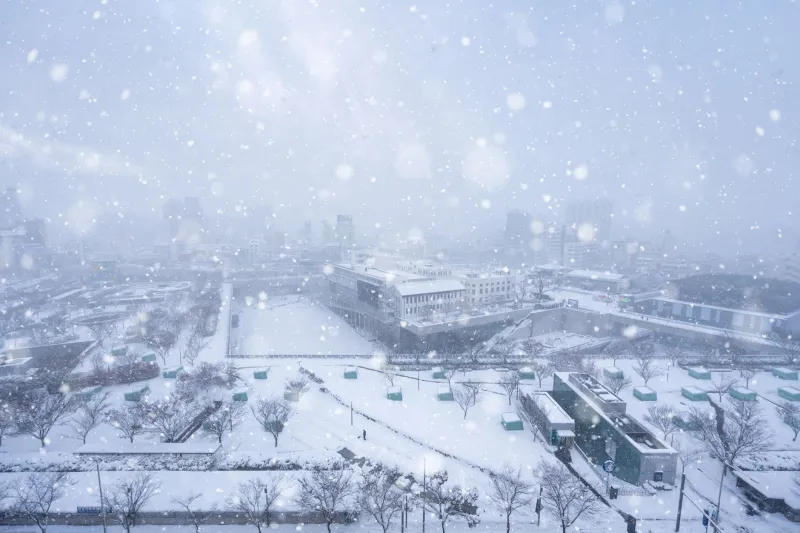
Every December, as temperatures across the Korean Peninsula drop toward freezing, something else rises with remarkable consistency: the volume of leaked documents, anonymous tip-offs, and formal whistleblower disclosures arriving at newsrooms, prosecutors' offices, and regulatory agencies across Seoul. It is a pattern that anti-corruption researchers have noted for years, and yet it remains poorly understood outside of South Korea. For American observers accustomed to thinking of institutional accountability as an event-driven phenomenon—triggered by a single courageous individual at a singular moment—the Korean winter cycle offers a more structural, and ultimately more instructive, model.
The Fiscal Calendar as a Confession Booth
The mechanics of the phenomenon begin with timing. South Korea's government and corporate fiscal year closes in December, a deadline that forces institutions of all kinds to finalize accounts, certify compliance reports, and submit regulatory filings. For employees who have spent the preceding months aware of irregularities—falsified procurement records, undisclosed political contributions, manipulated safety certifications—year-end paperwork transforms abstract moral discomfort into concrete legal exposure. When a mid-level accountant must personally sign off on figures she knows to be fraudulent, the calculus of silence changes dramatically.
This is not merely theoretical. The Korea Independent Commission Against Corruption and Civil Rights has documented that formal whistleblower applications spike between November and January, with the December peak running roughly 40 percent above the annual monthly average. Prosecutors in Seoul have noted similar patterns in the timing of voluntary cooperation agreements, with insiders approaching investigators far more frequently in the final weeks of the calendar year than at any other point.
The logic mirrors, in amplified form, what American compliance attorneys observe around their own year-end reporting cycles. The U.S. Securities and Exchange Commission has long noted that its whistleblower tip volume rises in the first quarter—the period when American corporations finalize annual reports and auditors complete their reviews. South Korea simply concentrates this pressure more intensely, because its regulatory culture demands simultaneous certification across more institutional domains at once.
Psychological Leverage of the Long Night
Beyond the purely administrative, there is a psychological dimension to winter disclosure that researchers are only beginning to map systematically. South Korea's winters are genuinely harsh, particularly in Seoul and the northern provinces, and the social rhythms of the cold months tend toward introspection and domestic withdrawal. The boisterous networking culture of summer—the outdoor gatherings, the festival circuits, the informal relationship-maintenance that lubricates institutional loyalty—recedes. Insiders find themselves spending more time alone, or in small, trusted circles, with fewer of the social reinforcements that ordinarily sustain complicity.
Dr. Jisoo Kwon, a behavioral economist at Yonsei University who has studied Korean institutional culture, argues that this seasonal shift in social texture genuinely matters. "The obligation to protect colleagues is partly maintained through continuous social contact," she has noted in her published research. "When that contact diminishes in winter, the psychological architecture of group loyalty weakens, and individuals are more likely to reframe their situation in terms of personal legal risk rather than collective solidarity."
American readers will recognize a parallel in the post-holiday phenomenon that employment lawyers sometimes call "January reckoning"—the period when workers who spent the holiday season reconsidering their professional situations return to offices newly resolved to report problems they had previously tolerated. The Korean winter whistleblower surge is a more institutionally embedded version of this same human tendency.
The Year-End Severance Calculation
A third factor, less psychologically abstract, concerns the structure of Korean employment contracts. A significant share of South Korean workers—particularly those in mid-tier corporate roles and government-adjacent positions—receive year-end performance bonuses and contract renewals in January. For employees who have been quietly documenting wrongdoing, the resolution of their employment status creates a decision point: having received their bonus and secured or declined contract renewal, they are at maximum financial independence relative to their employer, and at minimum vulnerability to immediate economic retaliation.
This dynamic has no perfect American analog, but it resembles the patterns observed when U.S. federal employees approach the end of probationary periods, or when private-sector workers vest their equity compensation. Structural moments of reduced financial dependency, it turns out, are also moments of elevated civic courage.
The Korean government has, with some deliberateness, sought to exploit this dynamic. The Corruption Investigation Office for High-ranking Officials, established in 2021, has quietly calibrated its outreach campaigns to peak in late November and early December, timing its public messaging about whistleblower protections and financial rewards to coincide with the period when insiders are most psychologically and financially positioned to act.
Lessons for American Accountability Architecture
For American policymakers and good-governance advocates, the Korean winter disclosure cycle carries several practical implications. First, it suggests that the timing of reporting deadlines and compliance certifications is not administratively neutral—it actively shapes when and whether insiders come forward. The SEC's whistleblower program, which has paid out more than $1.3 billion in awards since 2012, might generate even stronger results if its outreach were more deliberately synchronized with the corporate reporting calendar.
Second, the Korean experience challenges the American tendency to understand whistleblowing primarily as an individual moral act. In Seoul's winter cycle, disclosure is as much a structural output of institutional calendars, employment arrangements, and seasonal social patterns as it is a product of individual conscience. Building more robust accountability systems may require attending to these structural rhythms rather than relying solely on the cultivation of heroic individuals.
Finally, there is a cautionary note embedded in the Korean pattern. Because winter disclosures are so predictable, they are also, increasingly, anticipated. South Korean corporations with sophisticated compliance departments have begun conducting internal "winter audits" designed to identify and contain potential leaks before the December pressure peaks. Accountability, it seems, is subject to the same seasonal arms race as everything else in Korean institutional life. Whether the whistleblowers or the institutions they expose stay one step ahead may ultimately depend on which side better understands the cold logic of the calendar.