Who Can Afford to Stay Warm: South Korea's Winter Heating Divide and the Politics It Produces
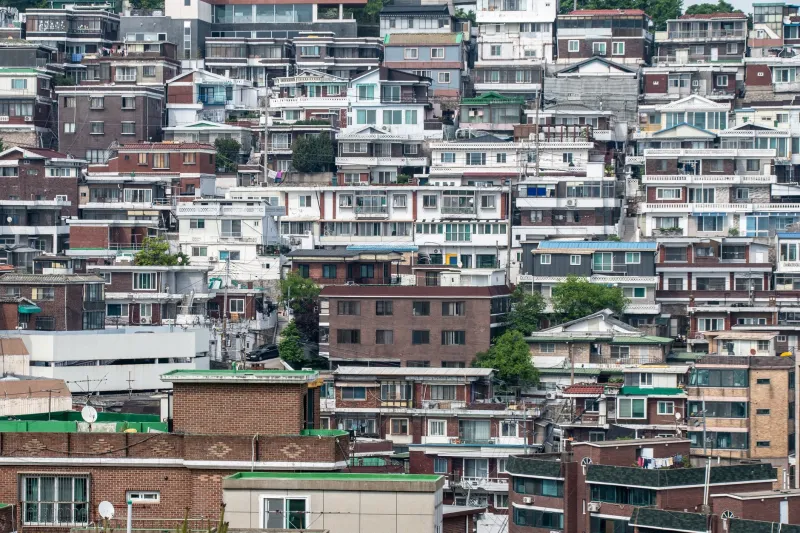
Seoul in January is a city of stark contrasts. In the gleaming apartment towers of Gangnam and Mapo, residents adjust their ondol floor-heating systems with smartphone apps, their quarterly energy bills absorbed comfortably into household budgets that also accommodate private school tuition and imported wine. Forty minutes away by subway, in the hillside villages of Dobong or the semi-basement apartments that proliferated in public consciousness after the film Parasite, families ration heating hours the way other households ration luxury goods—running the system for a few hours in the evening and tolerating the cold through the night. The physical distance between these two Seouls is negligible. The thermal distance is immense.
This gap is not an accident of geography or climate. It is the product of decades of housing policy, energy pricing decisions, and infrastructure investment choices that have systematically favored already-advantaged neighborhoods. And in South Korea's politically volatile winter season, it generates precisely the kind of embodied, daily resentment that eventually finds expression at the ballot box.
The Mechanics of Thermal Inequality
South Korea's dominant residential heating system, the ondol—a network of hot water pipes embedded beneath floor surfaces—is one of the most energy-efficient and physiologically effective heating technologies in widespread use anywhere in the world. It is also, in its modern form, deeply unequal in its distribution of costs. Buildings constructed since the 1990s, which tend to cluster in wealthier districts, are equipped with superior insulation, modern boiler systems, and centralized district heating connections that deliver energy at regulated, subsidized rates. Older housing stock, disproportionately occupied by lower-income residents, relies on individual boiler units that are less efficient, more expensive to operate per unit of heat generated, and more prone to failure during the coldest weeks of winter.
Korea District Heating Corporation data illustrates the divergence clearly. Households connected to centralized district heating networks pay, on average, roughly 30 percent less per unit of thermal energy than those relying on individual gas boilers. Since connection to district heating networks is largely a function of when and where a building was constructed, the subsidy flows disproportionately to residents of newer, more expensive apartments—precisely the households least in need of energy cost relief. The policy architecture, in other words, has managed to make heating subsidies regressive by design.
For residents of gosiwon (single-room occupancy facilities common among young workers and students) and banjiha (below-grade apartments), the situation is more acute still. These units, characterized by minimal insulation and aging infrastructure, can see winter heating costs consume 15 to 20 percent of monthly income for their occupants—a burden that has no parallel in the experience of the comfortable middle class.
Space, Warmth, and the Geography of the Vote
The political consequences of this thermal divide are not abstract. South Korea's electoral geography has grown increasingly correlated with the heating infrastructure map over the past two decades. Districts dominated by older, less energy-efficient housing stock have moved consistently toward opposition parties—and toward candidates who campaign explicitly on energy affordability and housing renovation subsidies. Districts with high rates of district heating connection, meanwhile, tend to display more electoral stability and more moderate political volatility.
This is not a coincidence. Political scientists studying Korean voting behavior have documented a robust correlation between residential energy cost burden and the likelihood of supporting populist or redistributive political platforms. The mechanism is intuitive: when a basic necessity consumes a disproportionate share of household income for months at a time, it creates a visceral, recurring reminder of economic precarity that is difficult for any amount of abstract economic optimism to override.
The winter heating season also concentrates political attention in ways that the warmer months do not. Energy bills arrive in January and February; boiler failures occur at the worst possible moments; news coverage of heating-related deaths among elderly residents living alone reliably generates public outrage. Politicians who have spent the preceding year successfully deflecting criticism of their economic records find the winter harder to manage, because its costs are personal, immediate, and impossible to dispute.
Policy Responses and Their Limitations
The South Korean government has not been indifferent to this dynamic. The Ministry of Trade, Industry and Energy administers an energy voucher program—the Energy Welfare Card—that provides low-income households with credits toward heating costs during the winter months. The program has expanded steadily since its introduction in 2015, reaching approximately 1.2 million households as of 2023.
Critics, however, argue that the voucher program addresses symptoms rather than causes. The fundamental problem—that energy infrastructure investment has systematically favored wealthier neighborhoods—remains unaddressed by transfer payments. Advocates for housing reform contend that a serious response would require mandatory insulation retrofits for older residential buildings, expanded district heating network connections in underserved areas, and reformed energy pricing that removes the existing structural subsidy flowing to already-advantaged households.
These reforms are expensive, administratively complex, and politically contested. Property owners in older buildings—many of them small-scale landlords rather than large corporations—resist renovation mandates that would impose costs they cannot easily pass on to tenants in a politically charged rental market. The result is a policy equilibrium in which the heating divide persists, the voucher program provides partial relief, and the underlying structural inequity continues to generate political energy that neither major party has found a durable way to absorb.
Lessons for American Cities
The Korean heating divide will resonate with American readers familiar with the politics of utility affordability in cities like Chicago, Detroit, and Philadelphia, where aging housing stock, inadequate insulation, and the legacy of disinvestment in lower-income neighborhoods produce strikingly similar patterns of energy cost burden and political resentment.
The United States spent approximately $8.6 billion on the Low Income Home Energy Assistance Program in fiscal year 2023—a figure that, like Korea's energy voucher program, addresses immediate need without resolving underlying infrastructure inequality. The Inflation Reduction Act's weatherization and building efficiency provisions represent a more structurally ambitious approach, but their implementation has been uneven and their benefits have not yet reached the households most in need at scale.
What South Korea's experience most clearly demonstrates is that thermal inequality is not a natural condition—it is a policy choice, accumulated across decades of investment decisions that can be traced, mapped, and ultimately reversed. The neighborhoods that cannot afford to stay warm in January are not simply unlucky. They are the downstream consequence of deliberate upstream choices about where to build infrastructure, how to price energy, and whose comfort to prioritize. In Seoul, those choices have produced a winter political season defined by grievance and volatility. American cities that have made similar choices should expect similar results.